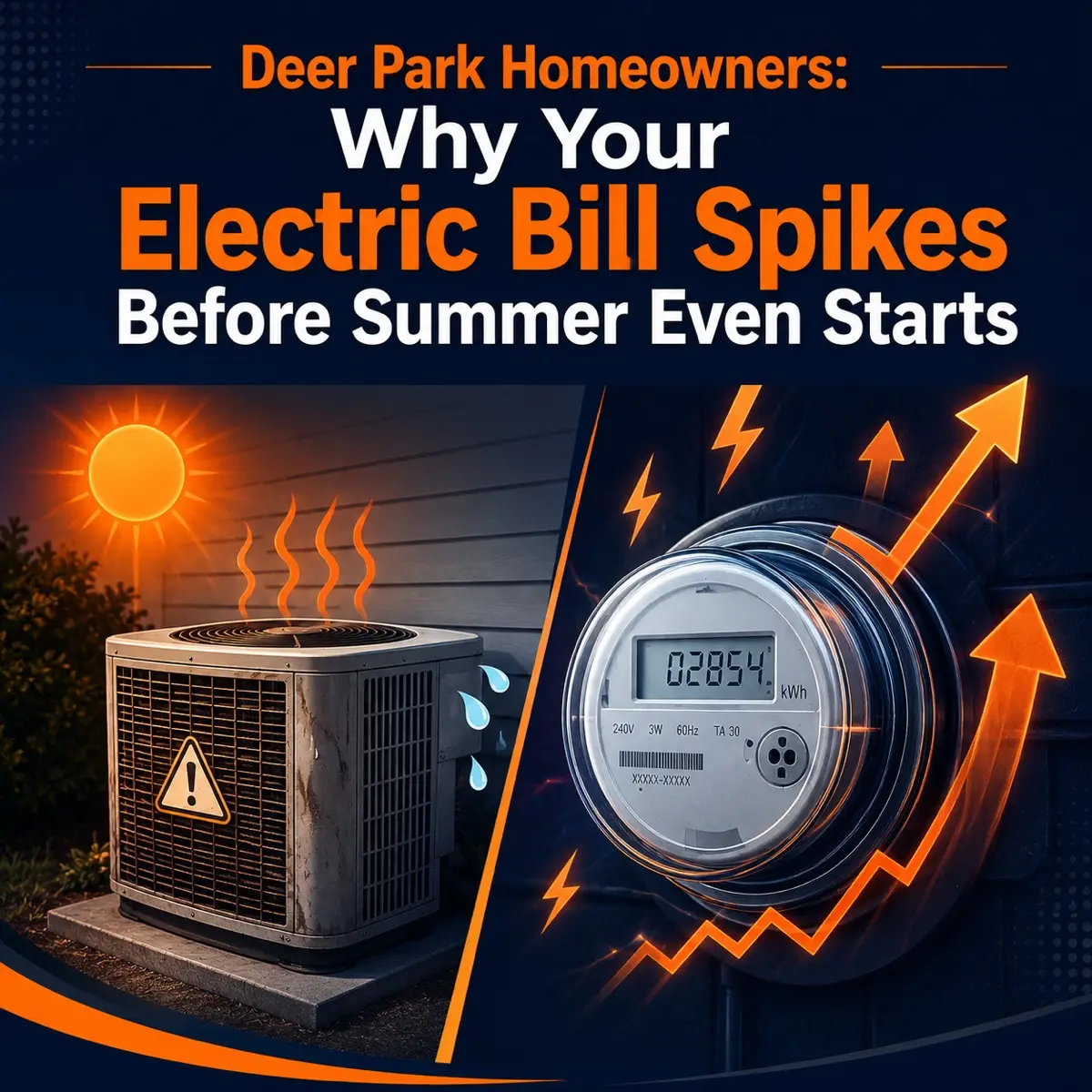
You haven’t even hit peak summer yet… so why does your electric bill already look painful?
If you're a homeowner in Deer Park, NY, this happens more often than you think. Many residents assume higher electric bills only come during July heat waves—but in reality, utility costs often start climbing weeks before summer officially arrives.
And the biggest culprit? Your air conditioning system.
Let’s break down what’s really happening—and how to stop wasting money before temperatures soar.
1. Your AC Is Working Harder Than You Realize
Even when outdoor temperatures feel
“comfortable,” your cooling system may already be running more than you notice.
In Deer Park, spring weather can
swing dramatically—cool mornings, warm afternoons, humid evenings. That
constant fluctuation forces your HVAC system to cycle on and off repeatedly.
Frequent cycling uses extra
electricity.
Older systems are especially
inefficient because they need more energy to maintain the same indoor comfort.
Signs
this may be happening:
Rooms feel unevenly cooled
Your AC turns on every 10–15 minutes
You hear the system constantly starting up
2.
Dirty Air Filters Quietly Increase Energy Costs
This is one of the most common (and
cheapest) problems.
A clogged air filter restricts
airflow, forcing your AC to work harder just to push cool air through your
home.
That means:
Higher energy use
More wear on your system
Higher monthly bills
For many Deer Park homes—especially
those with pets, pollen exposure, or spring dust buildup—filters get dirty
faster than expected.
A simple filter replacement can
noticeably reduce strain.
3.
Your Outdoor AC Unit Is Choked by Spring Debris
Leaves. Pollen. Dirt. Cottonwood
fluff.
After winter and early spring, your
outdoor condenser unit often becomes partially blocked.
When airflow is restricted, heat
can’t escape efficiently.
Result?
Your system consumes more
electricity while delivering worse cooling.
Check for:
Grass clippings
Dirt buildup
Bent fins
- Shrubs growing too close
4.
Hidden HVAC Problems Start Showing Before Summer
-
Early electric bill spikes can be warning signs—not just seasonal changes.
Possible hidden issues:
- Low refrigerant
- Failing capacitor
- Weak blower motor
- Dirty evaporator coil
- Leaky ductwork
- Aging compressor strain
5. Humidity Makes Your Home Feel Hotter
Long Island humidity starts creeping in before full summer arrives.
Even if the temperature seems manageable, excess moisture makes your home feel warmer.
That leads homeowners to lower the thermostat earlier than necessary.
Lower thermostat = longer AC runtime = bigger electric bills.
If your home feels sticky, muggy, or uncomfortable, humidity—not temperature—may be driving costs.
6. Older Systems Become Expensive Fast
If your AC is 10–15+ years old, pre-summer bills can be an early warning sign.
Older systems:
- Lose efficiency over time
- Require longer cooling cycles
- Break down more often
- Cost significantly more to operate
When to Call a Deer Park HVAC Professional
If your electric bill suddenly jumps and basic fixes don’t help, your system likely needs professional inspection.
A local HVAC technician can identify efficiency problems before they turn into expensive repairs—or full system failure.
For Deer Park homeowners, catching issues before peak summer can save hundreds.
Final Thought
A rising electric bill before summer isn’t random.
It’s often your HVAC system warning you that something needs attention.
The earlier you fix it, the more money you keep—and the less likely you’ll face an emergency breakdown during the hottest week of the year.
Don’t wait for your AC to fail when everyone else is calling for service.
These issues don’t always cause
immediate breakdowns.
They often show up first as rising
electric bills.
That’s why many Deer Park homeowners
don’t notice the problem until the AC fails during the first heatwave.
A unit that “still works” may still
be draining your wallet.
Quick Ways Deer Park Homeowners Can Lower Their Bill
Before calling a technician, try
these:
✅ Replace air filters
✅ Clear debris around outdoor unit
✅ Raise thermostat 2–3 degrees
✅ Keep blinds closed during sunny afternoons
✅ Seal air leaks around doors/windows
✅ Schedule preventative AC maintenance