Gas Furnace Won’t Ignite? Igniter, Flame Sensor and Pilot Problems Explained
· Waseem Shahzad, Lead Technician
By the K2 Cooling & Heating service team, Deer Park, NY. Gas furnace repair across Suffolk and Nassau. Updated November 21, 2026.
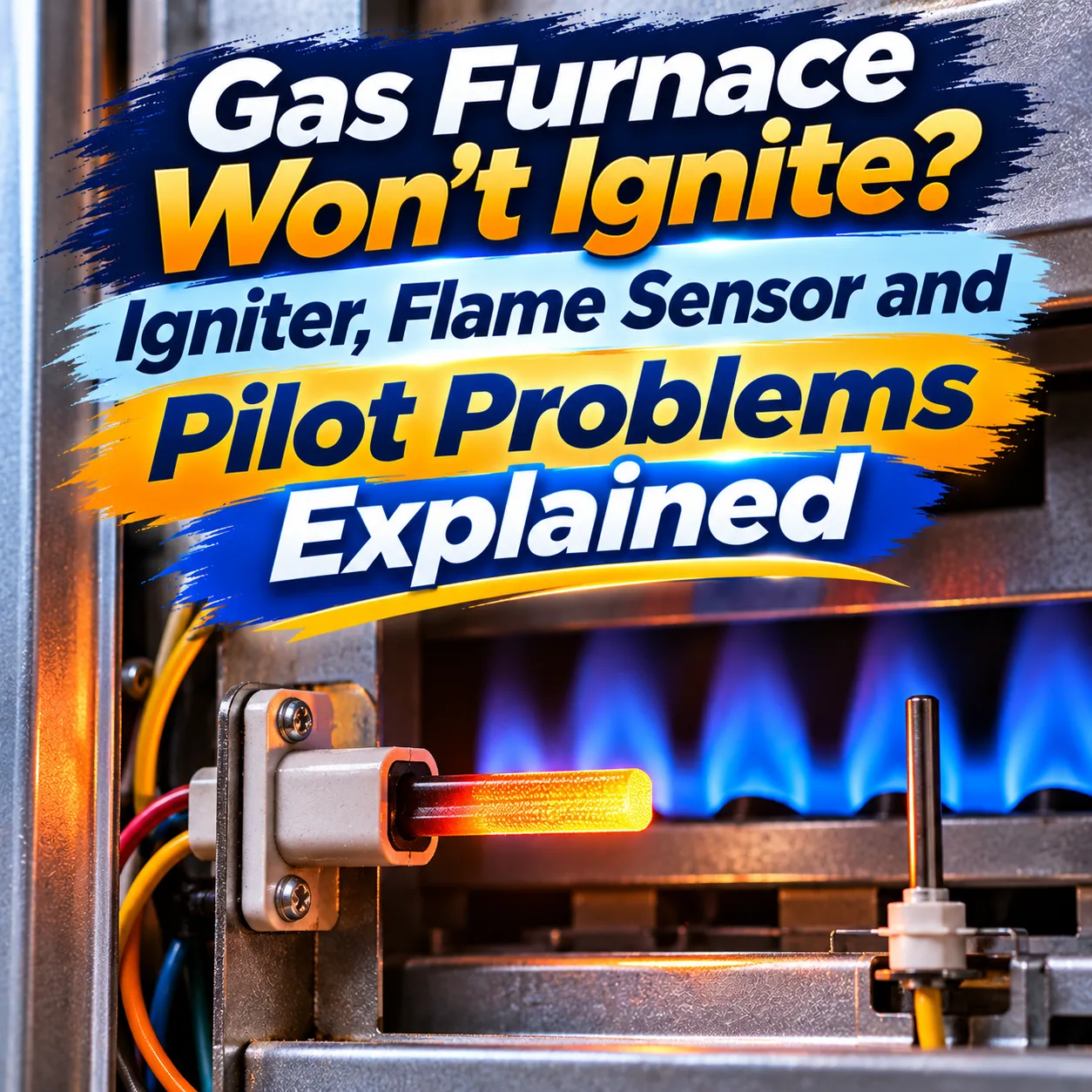
Short answer: when a gas furnace won't ignite, the problem is usually one of three parts. The igniter doesn't glow, the flame sensor doesn't "see" the flame, or the pilot won't stay lit. You'll hear the furnace try, maybe see a glow or a quick flame, and then nothing. Here's how to tell which part is failing and what you can safely check before you call.
Smell gas? Stop here. Don't touch switches, the thermostat or the furnace. Leave the house and call National Grid's gas emergency line or 911 from outside.
How does a gas furnace light, step by step?
A modern gas furnace lights in about 30 to 60 seconds, in a fixed order. The thermostat calls for heat, the inducer fan starts, a pressure switch confirms the venting is clear, the igniter heats up, the gas valve opens, and the flame sensor confirms there's a flame. If any step fails, the control board stops and tries again.
Knowing this order is the fastest way to diagnose a no-ignite problem, because the step where it stops tells you which part to look at:
- Thermostat calls for heat.
- Inducer (draft) fan starts. You'll hear a hum or whir.
- Pressure switch closes to prove the vent and flue are clear.
- Igniter glows bright orange (hot surface) or sparks (intermittent pilot).
- Gas valve opens and the burners light.
- Flame sensor proves the flame within a few seconds.
- Blower fan starts and warm air comes out of the vents.
After about three failed tries, most control boards go into lockout for an hour or more. That's why a furnace can seem "dead" even though nothing is broken beyond the one part.
How do I know if my furnace igniter is bad?
If the inducer fan runs but you never see an orange glow through the sight glass, and the burners never light, the hot surface igniter is the most likely cause. Igniters are brittle and wear out over time. A cracked one may glow only partway or not at all, and the furnace will try a few times and then lock out.
Most furnaces installed on Long Island in the last 25 years or so use a hot surface igniter, a small flat or rod-shaped piece of silicon carbide or silicon nitride that glows like a toaster element. Signs it's failing:
- No glow at all during the start-up sequence.
- A dim or patchy glow, or a visible crack or white spot on the element.
- The furnace worked fine all last winter, then quit on the first cold morning.
Don't touch the igniter. Oil from your fingers can make it fail early, and it's fragile enough to snap. Replacing it is a short job for a technician, who'll also check why it failed, since a bad igniter is sometimes a symptom of high voltage or a board problem.
Why does my furnace light and then shut off after a few seconds?
That's the classic sign of a dirty or failing flame sensor. The burners light, run for roughly 3 to 10 seconds, and shut off because the sensor can't confirm there's a flame. The control board closes the gas valve for safety, waits, and tries again, usually two or three times before it locks out.
The flame sensor is a thin metal rod that sits in the burner flame. Over a heating season it builds up a light coating that blocks the tiny electrical signal it sends to the board. It's one of the most common no-heat calls we get in November and December, especially on furnaces that skipped a fall tune-up.
A flame sensor can often be cleaned rather than replaced, but a technician should also check the ground connection and the microamp signal. A sensor that keeps getting dirty fast can point to a combustion or air supply issue that cleaning won't fix. If your furnace short-cycles for a different reason, see why a furnace turns on and off every few minutes.
What if my older furnace has a pilot light that won't stay lit?
On older furnaces with a standing pilot, a pilot that lights but goes out when you let go of the button usually means a worn thermocouple. A pilot that won't light at all usually means a clogged pilot tube or a gas supply problem. Both are common on furnaces 25 years and older still found in Long Island capes and ranches.
Here's how pilot systems differ:
| Ignition type | Common on | Usual failure | Typical symptom |
|---|---|---|---|
| Standing pilot | Older furnaces, roughly 25+ years | Thermocouple, dirty pilot orifice | Pilot goes out, won't stay lit |
| Intermittent (spark) pilot | Mid-age furnaces | Spark electrode, pilot assembly, flame sensing | Clicking or sparking but no flame |
| Hot surface igniter | Most newer furnaces | Cracked or worn igniter, flame sensor | No glow, or flame drops out after a few seconds |
If you have a standing pilot, the relighting steps are printed on a label inside the furnace door. Follow them exactly. If the pilot won't stay lit after one or two careful tries, stop and call. A pilot that keeps going out on an old furnace is also a good moment to read when it's time to replace a furnace.
What else can stop a gas furnace from igniting?
If the igniter never gets a chance to glow, the problem is usually earlier in the sequence: a pressure switch that won't close, a blocked vent or condensate line, a tripped switch, or a gas valve that's turned off. These stop the furnace before it ever tries to light, so the symptom is often just a humming inducer and no heat.
- Pressure switch or venting: On high-efficiency furnaces, a clogged condensate trap or a PVC vent pipe blocked by snow or ice keeps the pressure switch open. After a nor'easter, check that the white pipes on the side of the house are clear. Our post on high-efficiency furnaces shutting off in the cold covers this in detail.
- Door safety switch: If the blower door isn't seated, the furnace won't start at all.
- Gas supply: The handle on the gas line to the furnace should run parallel to the pipe. If other gas appliances aren't working either, call National Grid.
- Power: Check the service switch near the furnace (it often looks like a light switch) and the breaker.
What can I safely check before calling a technician?
You can safely check six things without opening the burner area: thermostat settings, the furnace switch and breaker, the filter, the gas valve handle, the vent pipes outside, and the blinking light code on the control board. If all of those check out and it still won't light, call for service.
- Thermostat: Set to "Heat," a few degrees above room temperature, with fresh batteries if it uses them. Our guide on a thermostat that says heat is on but the house is cold goes deeper.
- Power: Furnace switch on, breaker not tripped.
- Filter: A clogged filter can overheat the furnace and shut it down on a safety limit.
- Gas valve: Handle in line with the pipe.
- Vent pipes: Clear of snow, ice, leaves and nests.
- Light code: Look through the small window on the blower door and count the blinks on the board's LED. Match the pattern to the chart on the door, then write it down for your technician. It saves real diagnostic time.
A tip our technicians repeat every winter: reset once, not five times. Cycling power over and over clears the lockout, but it doesn't fix anything, and it hides the pattern a technician needs to see. If one reset doesn't bring the heat back, leave it and call.
What does a no-ignite call usually look like?
A pattern we see on the first cold weekend every year goes like this. A Deer Park homeowner says the furnace "keeps trying." The inducer starts, the burners light, and three seconds later they drop out. It repeats twice more, then goes quiet. The board is flashing a flame-sense code, and the sensor rod has a dull, coated finish.
In a case like that, the fix is usually a cleaned or replaced flame sensor and a check of the burner and ground connection, and the house is warming up again the same visit. The homeowner didn't need a new furnace. The furnace was doing its job: it refused to keep gas flowing when it couldn't prove there was a flame.
Is a furnace that won't ignite dangerous?
Not by itself. The control board is designed to shut off the gas when ignition fails, which is why the furnace locks out instead of filling the room with gas. The danger signs are a gas smell, a carbon monoxide alarm, a yellow or lazy flame, or soot around the furnace. Any of those means leave the house and call for help.
Make sure you have working CO detectors on every level and near bedrooms. Our carbon monoxide safety guide for Long Island homes explains placement and testing, and our gas smell and CO alarm page covers what to do right now.
Our recommendation
Watch the start-up sequence once and note where it stops. No glow points to the igniter. Lights then quits points to the flame sensor. Pilot won't stay lit points to the thermocouple or pilot assembly. Hum but nothing else points to venting or the pressure switch. Tell us which one you saw, plus the light code, and our technician shows up with the right part on the truck.
K2 Cooling & Heating repairs gas furnaces across Deer Park, Babylon, Huntington, Commack, Dix Hills, Bay Shore, Massapequa and the rest of Suffolk and Nassau. Call (631) 414-7141, see our no-heat emergency service, or book furnace repair in Deer Park online.
Frequently asked questions
Why won't my gas furnace ignite?
The most common causes are a cracked or worn hot surface igniter, a dirty flame sensor, or a pilot that won't stay lit. A blocked vent, tripped switch or closed gas valve can also stop ignition before it starts. Check the thermostat, power, filter and vent pipes first, then call a technician.
How do I know if it's the igniter or the flame sensor?
Watch the start-up. If the igniter never glows orange and the burners never light, suspect the igniter. If the burners light and then shut off after a few seconds, the flame sensor is the likely cause. The blinking light code on the control board usually confirms which one.
Can I reset my furnace if it won't light?
You can reset it once by turning the furnace switch off for 30 seconds and back on. If it still won't light, leave it off and call for service. Resetting over and over doesn't fix the cause and can hide the pattern a technician needs to diagnose it.
Is it safe to relight a furnace pilot light myself?
On older furnaces with a standing pilot, you can follow the relighting steps printed inside the furnace door. If you smell gas, don't try. If the pilot won't stay lit after one or two careful attempts, the thermocouple or pilot assembly likely needs a technician.
Does K2 Cooling & Heating repair gas furnaces on Long Island?
Yes. K2 Cooling & Heating repairs gas furnaces across Suffolk and Nassau, including Deer Park, Babylon, Huntington, Commack, Dix Hills, Bay Shore and Massapequa. Call (631) 414-7141 for furnace repair or no-heat service.