A furnace rated 90% efficient or higher works differently from the older metal-flue kind. It pulls so much heat out of its exhaust that the gases cool and turn partly to water, and it breathes through plastic pipes instead of a chimney. Both of those features can freeze or get buried when Long Island gets a hard cold snap or a heavy snowfall. When that happens, the furnace protects itself by shutting down. Here's how to tell what's going on and what you can safely check.
Why does a high-efficiency furnace shut off when it gets very cold?
A condensing furnace stops itself whenever it senses that exhaust can't leave or condensate can't drain. On frigid nights that usually means one of two things: the condensate line has frozen somewhere outside the heated space, or snow, ice or frost has closed off the PVC intake or exhaust pipe where it leaves the house.
The part doing the sensing is usually a pressure switch. The furnace's draft inducer fan pulls exhaust through the heat exchanger and out the vent, and the switch confirms that airflow before the burners are allowed to light. A blocked vent or a drain that has backed water up into the inducer housing keeps that switch from closing. The furnace then tries a few times, gives up and shows an error code, usually as a blinking light behind the front panel.
How do you know which furnace you have?
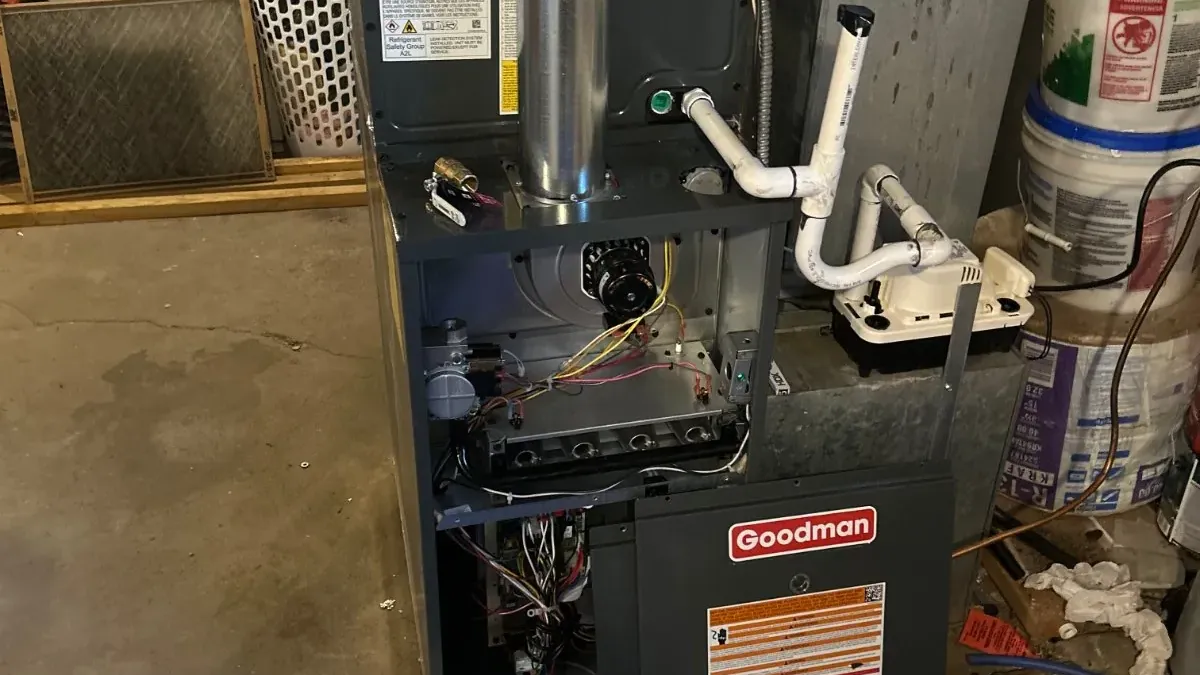
Look at the vent. If two white or gray plastic pipes run from the furnace to an outside wall or the roof, or one pipe and a small drain tube, you have a condensing furnace. If a metal pipe runs from the furnace into a chimney, it's a conventional furnace, and frozen condensate isn't your problem.
The rating label inside the furnace door also lists its efficiency. Many Long Island homes switching from oil to gas end up with a condensing furnace because the PVC vent avoids lining an old oil chimney, so a newer gas furnace is more likely to be the plastic-pipe kind.
Where does the condensate line freeze?
Condensate lines freeze where they leave heated space: in a garage, a crawlspace, an unheated attic or the last few feet before a line exits the wall. Water drips steadily from a condensing furnace while it runs, so a section of tube exposed to freezing air can ice over during a long cold stretch and back up into the furnace.
Attic furnaces are the most exposed, since the condensate often has to travel through cold attic space to reach a drain. A condensate pump in a cold garage can freeze the same way. When we find a line that freezes, the fix is to reroute it through heated space, insulate it, or add heat tape rated for the job, so the problem doesn't return every January.
Can snow block a furnace vent?
Yes. Side-wall PVC vents on Long Island houses often sit only a foot or two above the ground, and drifting snow or a snowbank from shoveling can bury them. Frost can also build up inside the exhaust pipe opening on very cold, still nights. Either one stops the furnace until the opening is clear.
Manufacturers set a minimum height for these terminations. Carrier and Goodman installation manuals, for example, call for at least 12 inches above the highest anticipated snow level or grade. On Long Island, drifts against a wall can top that, so after a storm it's worth walking around the house and checking that the two pipes are clear. Clear the snow by hand, never by chipping at the pipe.
What can a homeowner safely check?
Three checks are safe: clear snow or ice from the outside openings by hand, look for a condensate tube that is frozen or kinked where you can see it, and replace a clogged filter. After clearing a vent, turn the furnace off at its switch for a minute and back on to restart it.
Don't pour hot water into the furnace, open sealed panels, or bypass the pressure switch. If the furnace starts and then fails again, or you smell gas or exhaust, turn it off and call. Our no-heat emergency page lists other quick checks, and the guide to a furnace that won't light covers ignition problems.
When should you call for service?
Call when the vents are clear and the furnace still won't stay running, when the error returns after each restart, or when water is leaking from the cabinet. Those point to a frozen section of drain you can't reach, a cracked trap or hose, a failed inducer or a pressure switch that has stopped working.
A technician will check the condensate trap and hoses, measure the inducer's draft, test the pressure switch and look at how the vent and drain are routed. When a furnace keeps freezing up, the answer is usually a change to the install: a higher vent termination, a rerouted drain or a heated condensate pump. Our furnace repair technicians cover homes within 15 miles of Deer Park, and you can call (631) 414-7141 around the clock.
How do you keep it from happening again?
Most repeat freeze-ups come from how the furnace was installed, not from the furnace itself. Raising a vent termination above where snow piles, moving a drain line out of an unheated space and insulating the parts that must stay outside fix the cause instead of the symptom.
A yearly heating tune-up is the time to flush the condensate trap and hoses, check the inducer and pressure switch, and look at the vent terminations before the first snow. If you're planning a furnace replacement, ask how the new unit's vent and drain will be routed. That conversation is easier before installation day than after the first storm.
Need a technician rather than a guide? See our furnace repair service, or read about HVAC repair in Deer Park, NY. K2 answers 24/7 at (631) 414-7141.