One zone of the house is cold while the others are warm. Or one zone keeps heating with its thermostat turned all the way down. On a hot-water boiler with more than one thermostat, the zone valve is the usual suspect, but air in the pipes and a thermostat problem cause the same symptoms. Here's how to tell them apart and what you can safely do while you wait for a technician.
What does a zone valve do?
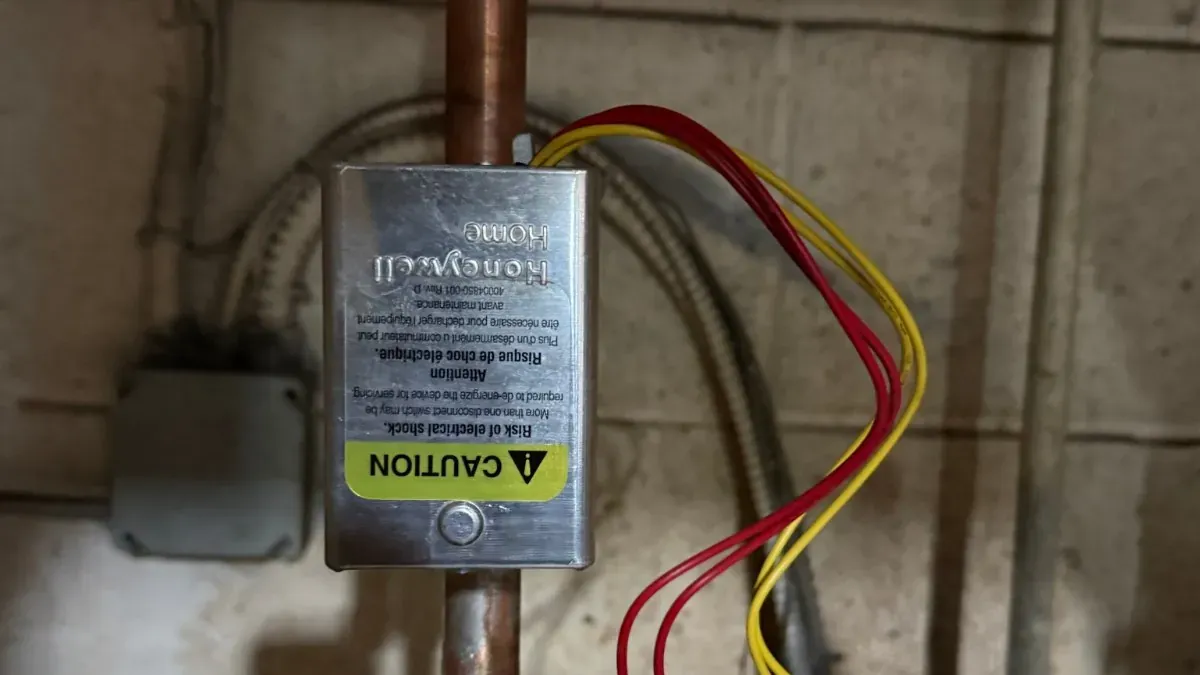
A zone valve is a motorized valve on the pipe feeding one heating zone. When that zone's thermostat calls for heat, the motor head opens the valve, and a small end switch inside tells the boiler to fire and the circulator to run. When the thermostat is satisfied, the valve closes and the zone stops heating.
Most Long Island homes with baseboard or radiators and two or three thermostats use zone valves. Some use a separate circulator pump for each zone instead. If you see one pump per zone and no valve heads on the pipes, the same checks below apply to the pumps.
How do you know if a zone valve is bad?
If one zone stays cold while the boiler is hot and the pipe just past that zone's valve never warms up, the valve is probably stuck closed. If a zone keeps heating with its thermostat turned down, the valve is probably stuck open, or its manual lever was left open after an earlier repair.
- Cold zone, hot boiler: the supply pipe is hot up to the valve and cool after it. The valve isn't opening.
- Zone heats nonstop: the valve is stuck open, the lever is on manual, or the thermostat wiring is shorted.
- Boiler won't fire for one zone but fires for the others: the end switch in that valve's head has likely failed.
- Humming or clicking from the valve head with no movement: the motor is failing.
Boiler pipes get hot enough to burn. Touch them briefly with the back of your hand, or just compare how warm the baseboard is right after the valve.
Is it the zone valve, the thermostat or air?
Start with the thermostat: fresh batteries, set to Heat, a few degrees above room temperature. If the valve head never moves when the thermostat calls, the problem is the valve or its wiring. If the valve opens and the pipe heats only partway, or you hear gurgling in the baseboard, air in that zone is the more likely cause.
Air is common, and it is easy to blame the valve for it. In October 2026 we were called to a Dix Hills home where one of three boiler zones wasn't heating. The zone valves were fine; air in the system was keeping that zone from heating. Waseem replaced the air bleeder, bled all three zones, and the cold zone came back. See that Dix Hills job. For more on air and cold rooms, read baseboard heat not working in one room. Low boiler pressure can also leave upstairs zones cold first; our boiler pressure guide shows how to read the gauge.
Can a bad zone valve stop the boiler from firing?
Yes. Most zone valves have an end switch that closes once the valve is fully open, and that switch is what tells the boiler to fire. If the switch fails, the valve may open but the boiler never gets the signal, so that zone stays cold even though the rest of the house heats normally.
How do you use the manual lever on a zone valve?
Most zone valve heads have a small lever marked manual or auto. Moving it to manual opens the valve by hand, so hot water can reach a cold zone while you wait for the repair. It's a temporary fix. Return it to auto once the valve is repaired, or that zone will heat whenever the boiler runs.
Move the lever gently. If it won't go, don't force it, because the gears inside the head are plastic and break easily. With the valve opened by hand, the boiler often won't fire for that zone on its own, so the zone may only warm up while another zone is calling for heat. That is still better than a cold zone on an outside wall in January.
Does replacing a zone valve mean draining the system?
Not always. On many valves the motor head unscrews or unclips from the valve body and can be swapped without opening the water side. A leaking or seized valve body is different: the zone has to be isolated or the system drained, the body replaced, then the system refilled and bled of air.
Sometimes a head swap isn't possible. On a Deer Park boiler in December 2025, the zone valve had to be replaced and changing only part of it wasn't an option, so Waseem and Shabby replaced the complete zone valve assembly, along with the expansion tank and the air vent, which were also due. See that Deer Park job.
When should you call a technician?
Call when a zone stays cold after you've checked the thermostat, when a zone won't stop heating, when the boiler won't fire for one zone, or when you see water at the valve. In freezing weather, a cold zone on an outside wall can freeze its pipes, so don't leave it for days.
If temperatures are dropping, our guide to keeping baseboard pipes from freezing covers what to do while you wait. If the whole upstairs is cooler rather than one zone, read upstairs cold, uneven heat between floors.
Tech tip: the next time everything is working, label each zone valve with the floor or rooms it serves. When a zone goes cold at night, knowing which valve to look at makes the phone call and the visit quicker.
One zone cold or stuck on?
K2 Cooling & Heating repairs hot-water and steam boilers within 15 miles of our Deer Park shop. A real person answers 24/7. Call or text (631) 414-7141, or book online. More on boiler repair and steam and hot-water boilers.
Need a technician rather than a guide? See our heating repair service, or read about HVAC repair in Dix Hills, NY. K2 answers 24/7 at (631) 414-7141.