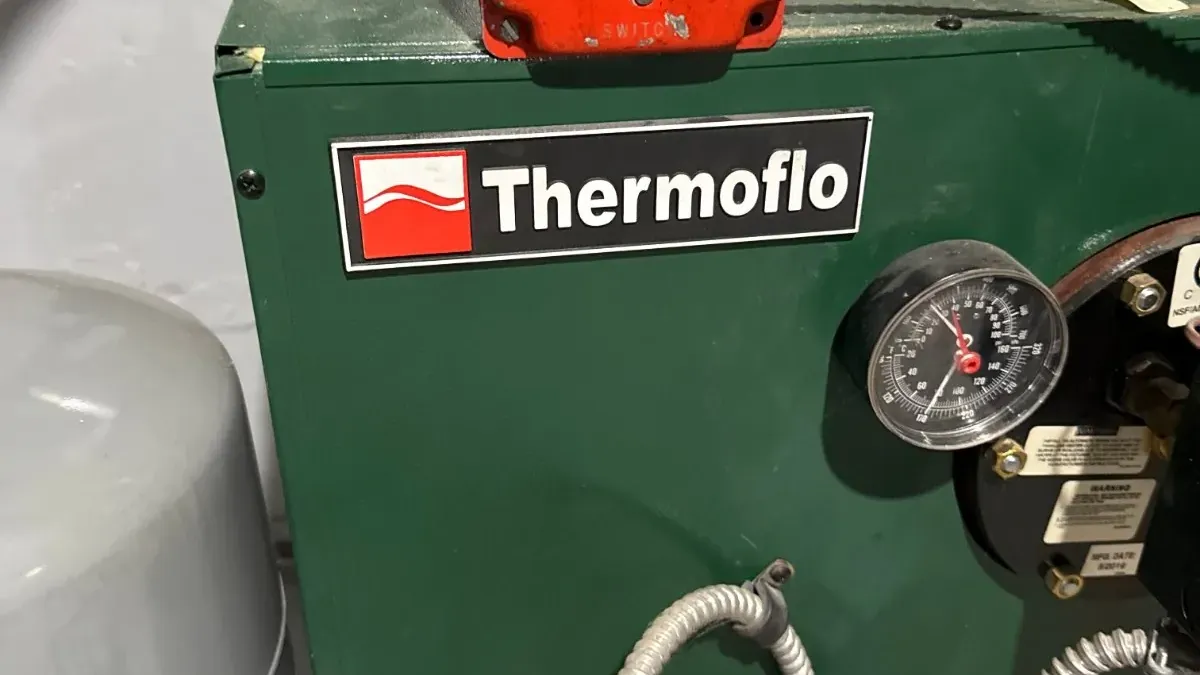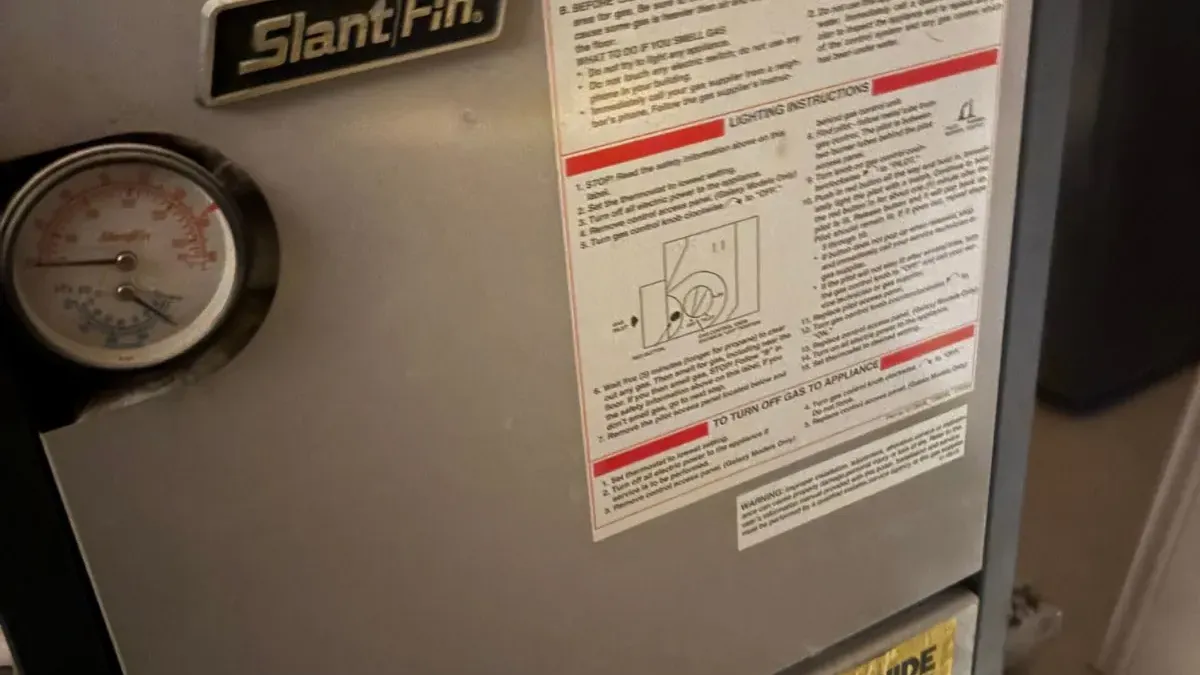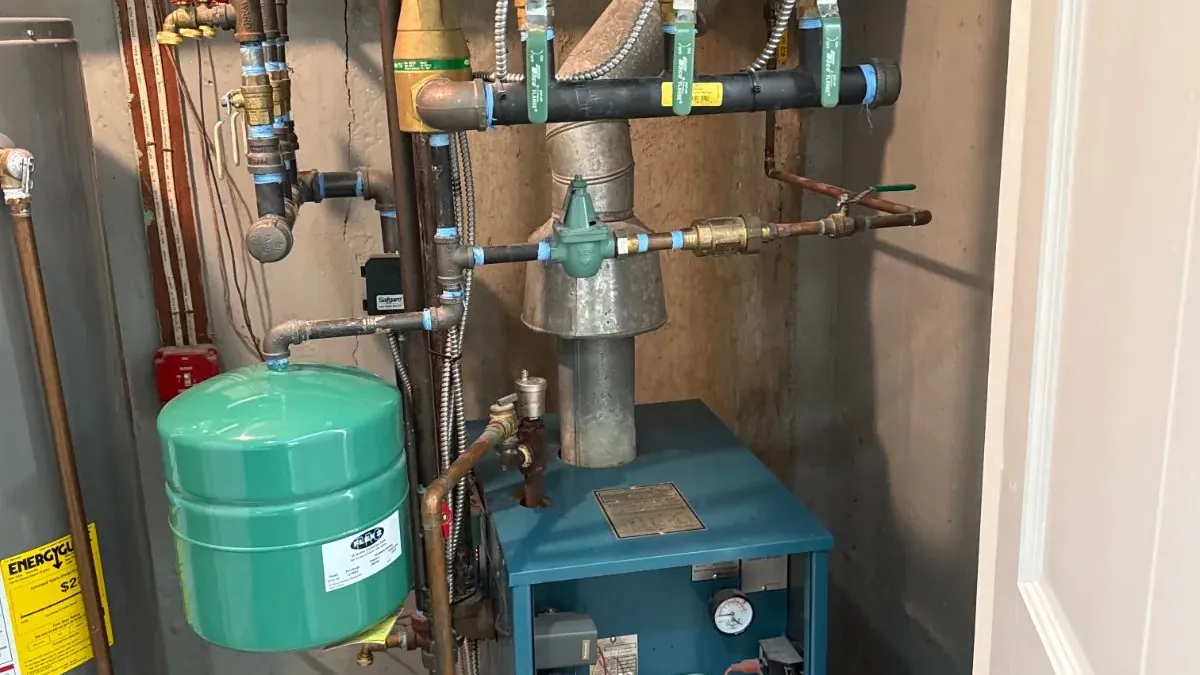
A hot-water heating system is full of water from the boiler to the last baseboard, and much of that piping runs along outside walls, under floors and through crawlspaces. As long as the boiler runs, the water keeps moving and stays warm. When the boiler stops on a frigid night, those same pipes can freeze within hours. Here's where the risk sits in a typical Long Island house, what you can do ahead of time and what to do if your heat goes out.
Why do baseboard heating pipes freeze?
Baseboard pipes freeze when water stops circulating through a cold part of the house. That happens when the boiler shuts down, a zone stays off for hours, or a pipe runs through space that never gets warm. Water expands as it freezes, which can split copper pipe or a baseboard element.
A burst usually shows up after the thaw, not during the freeze, so the first sign may be water on the floor when the heat comes back. Hot-water systems on Long Island are often split into zones, and a rarely used zone on a cold side of the house sits idle the longest, which makes it the most likely to freeze.
Where are the pipes most at risk?
The riskiest runs are along outside walls, in crawlspaces, over garages, in unheated porches or additions, and in kick-space heaters near doors. Any spot where cold air leaks in, such as a gap at the sill plate or an open basement window, can freeze a pipe even when the rest of the house is warm.
Older capes with second-floor knee walls and ranches with crawlspaces under an addition are common trouble spots here. If you know a room that always runs cold or a baseboard that takes longest to warm up, treat it as the weak point and check it first during a cold snap.
How do you keep heating pipes from freezing?
Keep the heat on and steady during cold weather, let every zone run, seal drafts near pipes and keep the boiler maintained so it doesn't fail on the coldest night. The American Red Cross advises keeping the thermostat at the same temperature day and night during a cold snap, and no lower than 55°F if you go away.
Turn up a zone you normally keep off so water moves through it at least a few times a day. Close garage doors if pipes run through the garage, and seal holes where cold air reaches pipe runs. Pipe insulation helps on exposed runs in basements and crawlspaces, but it slows freezing rather than preventing it if the heat stops altogether.
Does antifreeze in a boiler system make sense?
Glycol antifreeze protects zones that can't be kept warm, such as a detached garage, but it isn't a fix for a whole house. It carries heat less well than water, needs to be the right type and strength for a boiler, and must be tested periodically. Most homes are better served by keeping the heat running.
If you're considering it for a single zone, a technician should confirm that the boiler, expansion tank and other parts are compatible and that the zone can be separated from the domestic water supply. It's a deliberate design choice, not something to pour in before a storm.
What should you do if the heat goes out in freezing weather?
First check the basics: the thermostat setting, the boiler's power switch, the circuit breaker, and fuel if you heat with oil. If the boiler still won't run, call for service right away, then open cabinet doors under sinks on outside walls and let faucets drip to slow freezing in the plumbing.
Don't use an open flame to warm pipes. A space heater can help keep a cold room above freezing while you wait, used with care and away from anything that can burn. Tell the dispatcher how long the heat has been off and whether any zone is already cold, so the technician knows to check for frozen sections. Our no-heat page lists more quick checks, and our oil burner reset button guide explains when pressing reset is and isn't a good idea.
What does a pre-winter boiler check look at?
A tune-up confirms the boiler fires cleanly and that its safety controls, circulators, zone valves and expansion tank are working, so it's less likely to stop on a cold night. Technicians also bleed trapped air, which blocks flow through baseboards and leaves cold sections where freezing starts.
Air in the system is one of the most common problems we see. In a Huntington home where the house wouldn't get past 63, dust-packed baseboard fins and three leaking air bleeders were the cause. In a Deer Park repair, an aging boiler got a new zone valve assembly, expansion tank and air vent. You can book a boiler repair or tune-up any time at (631) 414-7141.
Need a technician rather than a guide? See our boiler repair service, or read about HVAC repair in Deer Park, NY. K2 answers 24/7 at (631) 414-7141.