By the K2 Cooling & Heating service team, Deer Park, NY. Updated November 10, 2026.
The thermostat says HEAT, the little flame icon is on, and you're still sitting on the couch in a hoodie. We get this call almost every day once November hits Long Island. The good news: a lot of the time it's something you can spot in five minutes without tools. Here's the order our technicians check things on a service call, so you can do the first pass yourself.
1. Is the thermostat actually asking for heat?
Set it at least 3 degrees above the current room temperature and wait 5 minutes. If the setpoint is only a degree above room temp, many thermostats won't call for heat at all. Also check that the mode is HEAT (not COOL or OFF), that a schedule or "eco" setting isn't overriding you, and that the fan is on AUTO. A fan set to ON blows air all day, even between heating cycles, and that air feels cold.
2. Are the thermostat batteries or power dying?
Weak batteries are one of the most common reasons a thermostat shows heat but never turns the system on. The screen can still light up while the signal to the furnace or boiler drops out. Swap in fresh batteries even if there's no low-battery warning. If it's a hardwired smart thermostat and the screen keeps rebooting, it may not be getting steady power from the system, and that's a call for us.
3. When did you last change the furnace filter?
A clogged filter can shut a furnace down on its own safety limit within minutes. When air can't move, the heat exchanger overheats, the high-limit switch trips, and the burners shut off while the blower keeps running. That's why you feel lukewarm or cool air. Pull the filter. If you can't see light through it, replace it. On Long Island, with long heating seasons and plenty of older homes, we recommend checking it every month from November through March.
4. Is the furnace or boiler getting power?
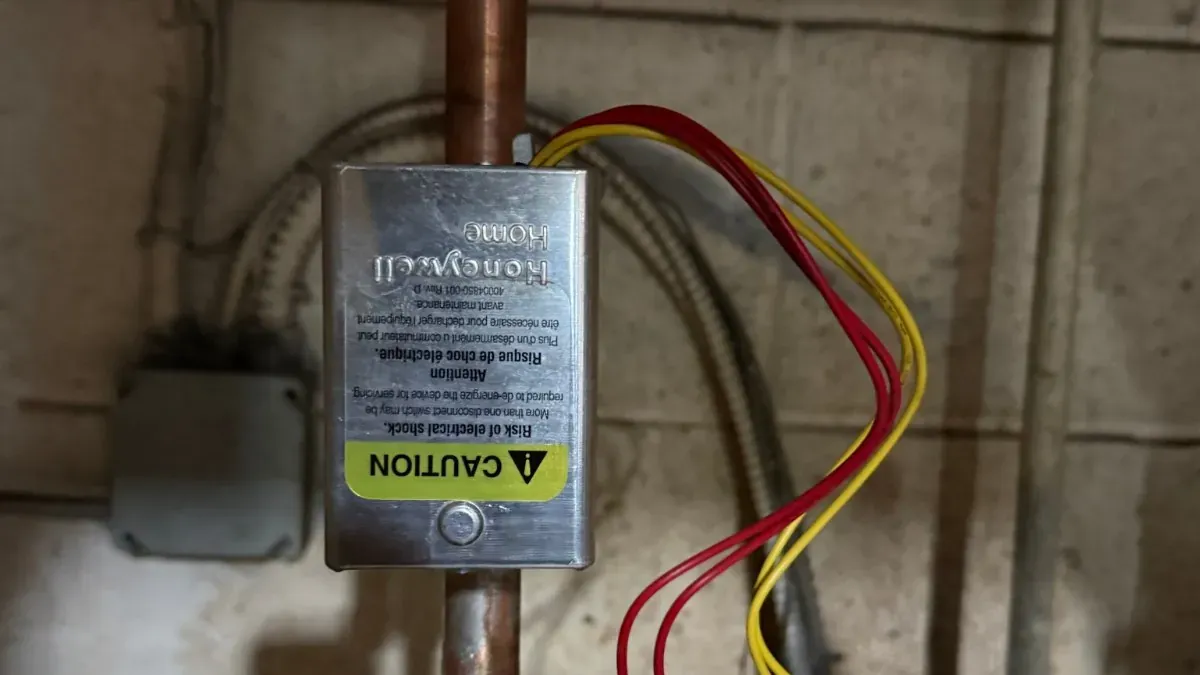
Check the light switch near the unit, the breaker, and the furnace door. Most systems have a service switch that looks exactly like a regular light switch, usually on the wall or ceiling near the furnace or at the top of the basement stairs. Someone flips it by accident more than you'd think. Also make sure the blower door panel is pushed on tight. It presses a safety switch, and if the panel is loose, the furnace won't run.
5. Is the furnace locked out?
Look for a small window on the furnace with a blinking light: that's a diagnostic code. If the furnace tried to light a few times and failed, it locks itself out for safety. A common cause is a dirty flame sensor, which we see a lot on furnaces that skipped their fall tune-up. You can reset it once by turning the power off for 30 seconds and back on. If it locks out again, stop there and call us. Repeated resets don't fix the problem.
6. Do you have fuel?
Many Long Island homes still heat with oil, and an empty tank is a top cause of no-heat calls. Check your tank gauge, and if you're on automatic delivery, confirm the last fill date. On gas systems, make sure the gas valve handle near the unit runs parallel with the pipe (that's "on"). For boilers, check the pressure gauge. Most residential systems want roughly 12 to 15 PSI cold. Very low pressure means water isn't circulating to your radiators or baseboards.
7. Is warm air or hot water getting to the rooms?
If the system is running but some rooms stay cold, the problem is delivery, not the heat source. Open supply registers and clear furniture and rugs off the returns. On high-efficiency furnaces, check the two white PVC pipes outside: snow, leaves, or a bird's nest blocking them will shut the furnace down. With heat pumps, a short burst of cool air during a defrost cycle is normal. Cold air for 20 minutes or more is not.
What does a typical call like this look like?
Here's one we see every fall. A homeowner in Suffolk County calls on the first really cold night: thermostat set to 70, house at 61, furnace "running." Our tech arrives, pulls a filter that's gone gray and stiff, and finds the high-limit switch cycling the burners off every few minutes. New filter, quick check of the flame sensor and blower, and the house is back to temp within the hour. Nothing broke. The system was just protecting itself.
What's our technicians' best tip?
Our techs say the same thing on almost every no-heat call: do the fall tune-up before the first cold snap, not after. A dirty flame sensor, a weak igniter, or a failing capacitor gives warning signs in October. In January, it gives you a cold house and a wait for an open appointment. If your furnace is already blowing cold air, our guide on why a furnace blows cold air goes deeper, and 10 common heating problems covers the rest.
When should you stop checking and call a pro?
Call us if the furnace locks out again after one reset, you smell gas or burning, the boiler pressure keeps dropping, breakers keep tripping, or you've gone through all seven checks and the house is still cold. Don't open gas valves, burner compartments, or electrical panels inside the unit. If you smell gas, leave the house and call your utility first.
No heat in your Long Island home? Call K2 Cooling & Heating at (631) 414-7141. We handle heating repair for furnaces, boilers, and heat pumps across Suffolk and Nassau County from our shop in Deer Park. Schedule a heating repair.
Need a technician rather than a guide? See our heating repair service, or read about HVAC repair in Deer Park, NY. K2 answers 24/7 at (631) 414-7141.