Written by the service team at K2 Cooling & Heating in Deer Park, NY: licensed and insured HVAC contractors serving Suffolk and Nassau County.
A ductless mini-split is a heat pump that heats and cools individual rooms without ductwork. On Long Island, a professionally installed system takes one to three days for most homes, and the cost depends mainly on how many rooms (zones) you are conditioning, the equipment tier, and how far the refrigerant lines have to run. This guide covers what a proper installation involves here, which local house types it suits, and why the work belongs with a licensed installer.
Why Mini-Splits Make Sense on Long Island
Long Island winters are milder than upstate New York, because the surrounding water moderates the cold. Most heating hours here are in the thirties and forties, which is exactly where a heat pump runs most efficiently. Summers are hot and humid, and an inverter-driven mini-split runs long, low-speed cycles that pull moisture out of the air instead of blasting a room cold and shutting off.
The key is choosing cold-climate equipment. Cold-climate mini-splits are rated to keep producing heat well below freezing, so they can carry a room or a whole floor through a normal Long Island winter. Standard models lose capacity much faster in the cold. If a quote does not say whether the outdoor unit is a cold-climate model, ask.
Long Island Homes Where Ductless Works Best
- Cape Cods. Finished upstairs rooms under the roof are often the hottest rooms in summer and the coldest in winter, and there is rarely room to add ducts. A wall-mounted head or a compact ceiling cassette solves it without opening walls.
- High ranches. The lower level often runs cooler and damper than the upper floor on one thermostat. A separate zone downstairs lets each level run at its own setting.
- Finished basements. Basements on Long Island tend to be damp in summer and chilly in winter. A mini-split adds heat and dehumidification without tying into the main system.
- Additions, sunrooms and converted garages that sit at the end of a duct run the central system was never sized to reach.
- Homes with baseboard or radiator heat and no central air, where a multi-zone system adds cooling to the bedrooms and efficient shoulder-season heat while the boiler stays as backup.
What a Professional Installation Includes
- A load calculation for each room. Sizing every head to the room it serves, not to a rule of thumb. An oversized head short cycles and leaves a room clammy.
- Placement. Indoor heads where the air can reach the whole room and the condensate can drain by gravity or a pump; the outdoor unit on a level pad or wall bracket, raised above snow and away from dryer vents and roof runoff.
- Line set and drain. One small wall penetration per head, sealed and sleeved, with the refrigerant lines insulated and protected by a line-set cover outside.
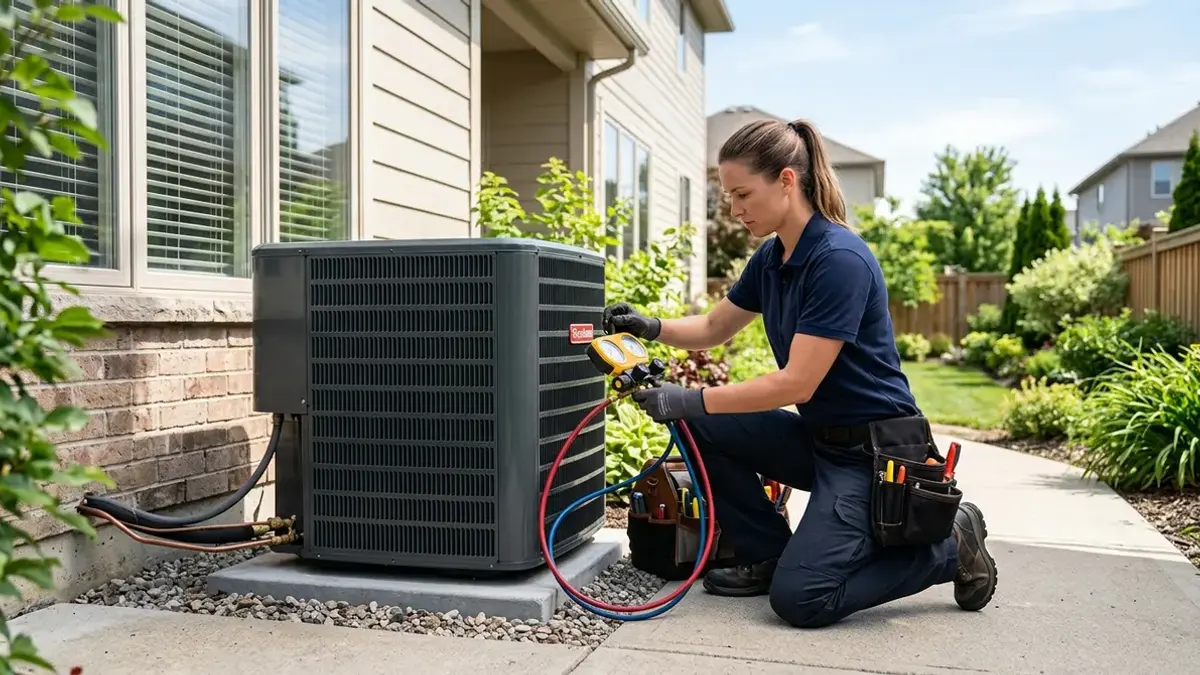
- Refrigerant connections. Flare or brazed joints made to the manufacturer's torque or brazing procedure, then a nitrogen pressure test to find leaks before any refrigerant is released.
- Deep vacuum. The lines are evacuated to a measured micron level and checked to hold, which removes moisture that would otherwise damage the compressor.
- Electrical. A dedicated circuit and an outdoor disconnect sized to the equipment, run to code.
- Start-up and commissioning. Checking operation in heating and cooling, airflow, drainage and controls, then walking you through the remote, filters and settings.
Our mini-split installation page covers single-zone and multi-zone layouts in more detail.
What Affects the Cost
- Number of zones. Each indoor head adds equipment and labor, and multi-zone outdoor units cost more than single-zone ones.
- Equipment tier. Cold-climate models and higher efficiency ratings cost more up front and run less in winter.
- Head style. Wall-mounted heads are the most common; ceiling cassettes, slim ducted units and floor consoles cost more to install.
- Line-set length and routing, especially in two-story homes where lines run up an exterior wall or through a closet.
- Electrical work, including whether the panel has room for a new circuit.
Financing is available through Rheem KwikComfort, with credit provided by Synchrony Bank, subject to credit approval. PSEG Long Island offers rebates on qualifying heat pumps; homeowners claim them through a PSEG Long Island participating contractor or directly with PSEG Long Island, and K2 is not a participating contractor, so check current terms at psegliny.com before you plan around one.
Why Hire a Licensed Installer Instead of Doing It Yourself
Pre-charged do-it-yourself kits are sold online, and mounting a head is within reach of a handy homeowner. The parts that decide whether the system lasts are not:
- Refrigerant work requires EPA Section 608 certification. Opening or charging a refrigerant circuit is regulated, and most mini-splits need the line set evacuated and the charge adjusted for the line length.
- Leaks and moisture are invisible until they cost you. A flare that is a fraction off, or a vacuum that was never measured, leads to slow refrigerant loss and compressor damage months later.
- Warranties often require a licensed installer. Many manufacturers shorten or void the warranty on systems that were not installed and registered by a licensed contractor.
- Electrical and code requirements. The circuit, disconnect and outdoor unit placement have to meet code, and your town may require a permit; K2 does not file town permits, so confirm the requirements with your building department.
- Sizing and placement. The most common DIY problem is a head that is too big, in the wrong spot, and never quite comfortable.
How Long It Takes
A single-zone system is usually installed in a day. Multi-zone systems typically take one to three days, depending on the number of heads and how the lines are routed. We confirm the schedule when you book, based on equipment availability; we do not promise specific installation dates.
Get a Ductless Estimate
K2 Cooling & Heating installs single-zone and multi-zone ductless systems for homes within about 15 miles of our shop in Deer Park, from Capes in Deer Park to high ranches across Suffolk and Nassau. We size each room, check your electrical panel and give you a written quote.
Call (631) 414-7141 or request an estimate online. See our ductless mini-split installation service for more.