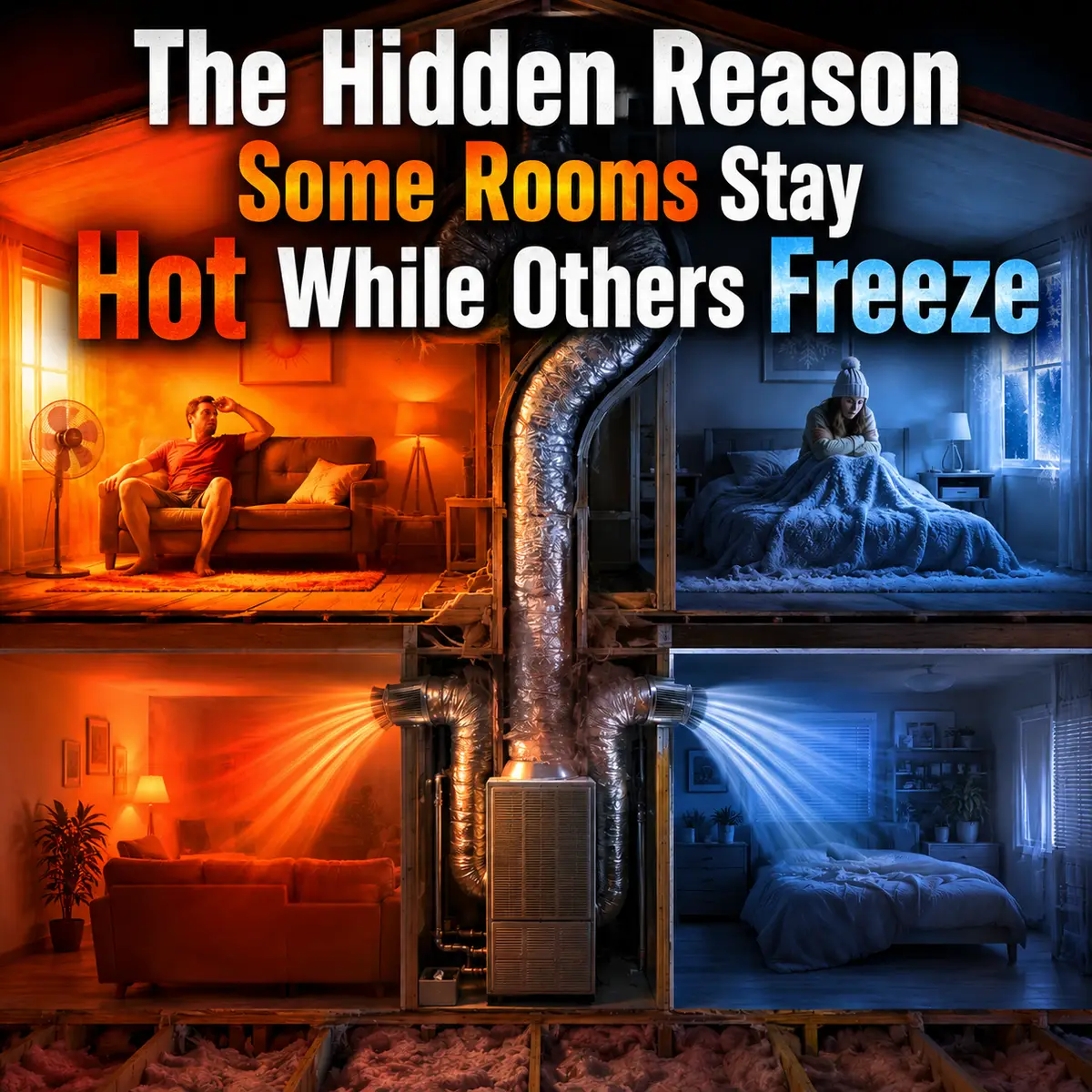
You set the thermostat to the perfect temperature, expecting your entire home to feel comfortable—yet somehow, one bedroom feels like a sauna while the living room feels like an icebox. Sound familiar?
This is one of the most common frustrations homeowners face, especially during peak summer and winter months. Many assume the HVAC system is simply “getting old,” but the real issue is often hidden deeper in your home’s airflow system.
Let’s uncover why some rooms stay hot while others freeze—and what you can do about it.
1. Poor Airflow Balance
Your HVAC system is designed to
distribute conditioned air evenly throughout your home. But when airflow
becomes unbalanced, certain rooms receive too much air while others barely get
enough.
This can happen because of:
Closed supply registers
Furniture blocking airflow
Dirty HVAC filters restricting circulation
Even something as simple as a
clogged air filter can reduce system efficiency and create temperature
inconsistencies.
2.
Leaky Ductwork (The Hidden Culprit)
One of the biggest hidden reasons
behind uneven temperatures is leaking ductwork.
Your duct system carries cooled or
heated air from your HVAC unit to each room. If there are leaks, cracks, or
disconnected ducts, conditioned air escapes before reaching its destination.
That means:
Far rooms never cool properly
Your HVAC runs longer
Energy bills increase
This issue often goes unnoticed
because ducts are hidden behind walls, ceilings, or attics.
3. Poor Insulation
Sometimes the HVAC system is working
perfectly—but your home isn’t holding the conditioned air.
Rooms with poor insulation can
quickly lose cool air in summer or warm air in winter.
Common trouble spots:
Exterior walls
Older windows
Poorly sealed doors
This is especially common in older
New York homes.
4.
Incorrect HVAC System Sizing
Bigger isn’t always better.
If your HVAC system is too large, it
cools the house too quickly without properly circulating air.
If it’s too small, it struggles to
keep up, leaving distant rooms uncomfortable.
Improper sizing often causes:
Hot and cold spots
Frequent cycling
Higher utility costs
Reduced system lifespan
5.
Thermostat Placement Problems
Your thermostat controls your entire
HVAC system—but if it’s installed in the wrong spot, it can send misleading
temperature readings.
Examples:
Close to kitchens
Next to vents
In unusually warm/cold hallways
Your system may shut off early while
other rooms remain uncomfortable.
6.
Multi-Story Home Air Challenges
Heat naturally rises.
That’s why upstairs bedrooms often
feel much warmer than downstairs spaces.
Without zoning controls or airflow
adjustments, multi-level homes often struggle with temperature consistency.
How
to Fix Uneven Room Temperatures
Solutions may include:
✅ Professional duct inspection
✅ Air balancing adjustments
✅ HVAC filter replacement
✅ Sealing duct leaks
✅ Insulation improvements
✅ Thermostat relocation
✅ Zoning system installation
Final Thoughts
If some rooms stay hot while others
freeze, your HVAC system is trying to tell you something.
The issue may not be the AC unit
itself—it could be hidden airflow problems, duct leaks, or insulation
weaknesses quietly costing you comfort and money every month.
A professional HVAC inspection can
identify the root cause and restore balanced comfort throughout your home.
Will a New or Bigger Air Conditioner Fix It?
Usually not, and this is the most expensive mistake we see with uneven rooms. A new system connected to the same ductwork, the same attic and the same thermostat location tends to produce the same hot upstairs and cold downstairs. A larger one can make it worse, because it satisfies the thermostat faster and shuts off before air has had time to reach the far rooms.
Before anyone quotes you a replacement for a comfort problem, the cause should be measured:
- How much air is actually arriving at the problem rooms compared with the rest of the house
- Whether the upstairs has enough return air to pull warm air back to the system
- The condition of duct runs in the attic, including crushed or disconnected sections
- Attic insulation over the bedrooms
If the equipment is old and due anyway, fix the airflow and insulation issues as part of the replacement. If it is not, those fixes alone are often enough.