What has gone wrong on the Islip boilers we service?
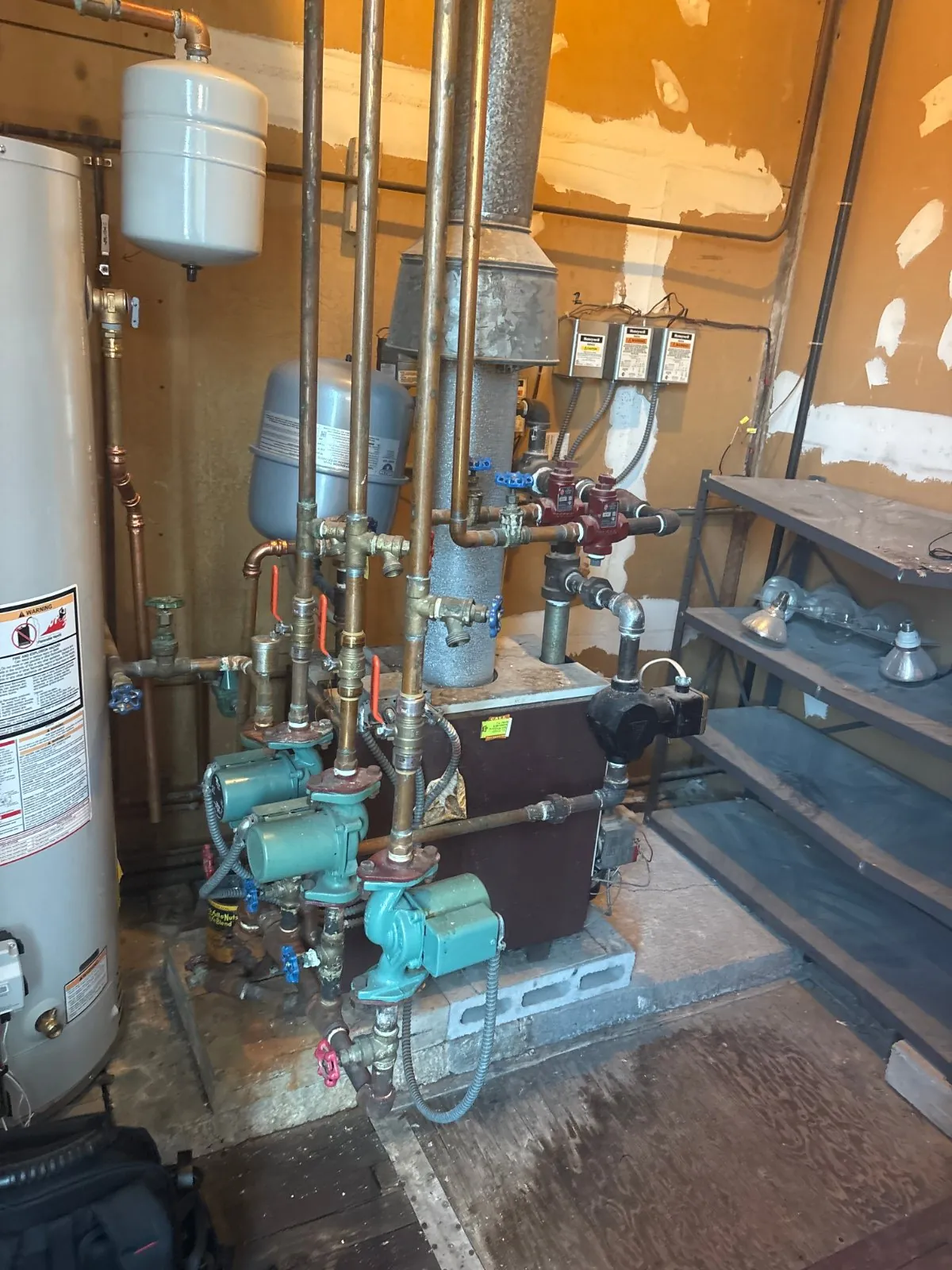
Controls and small fittings, not the boiler itself. On the Islip system in our records, the failures were a thermostat in one apartment, a zone relay control that stopped calling for heat, and air bleeders that had started to leak. Each one left part of the building cold while the boiler stayed sound.
That pattern is typical of a gas hot-water system that has been running for years. The heat exchanger and burner keep working, while the cheaper parts around them wear out: thermostats lose their contacts, relays stop switching, and the automatic air bleeders on the piping start to drip. Replacing those parts brings the heat back without touching the boiler.
What did a no-heat call in Islip actually involve?
Finding which zone was cold and why. In November 2025, one apartment had no heat; the technician traced it to a failed thermostat and a leaking air bleeder, replaced both and tuned up the boiler across all its zones. In May 2026, another apartment went cold, and this time the zone relay control and thermostat had failed.
On a multi-zone system, a no-heat call rarely means the whole building is cold. The boiler can be firing normally while one zone never opens, because the thermostat, the wiring or the relay that turns on that zone's pump or valve has failed. We check each zone in turn, from the thermostat back to the boiler controls, before deciding what to replace. You can read the November visit in full on the Islip no-heat project page.
Tip from Shabby, the technician on the November 2025 visit: when one zone goes cold, start at that zone’s thermostat and work back toward the boiler. On that call the thermostat had failed, and a leaking air bleeder nearby was replaced at the same time so the zone would not lose water again.
Why do air bleeders matter on an Islip hot-water system?
They let trapped air out of the piping so water can circulate. When an air bleeder starts leaking, the system loses water and pressure, and air can build up in the loops, leaving radiators or baseboard cool. At the October 2026 tune-up on this Islip system, six air bleeders were leaking and all six were replaced.
After the new bleeders went in, the technician bled the air out, drained the old water from the system, refilled it with fresh water and checked every zone. A slow drip at a bleeder is easy to miss, so we look for it at every tune-up. If you see rust streaks or a damp spot under a fitting near the top of the boiler piping, mention it when you call. Our guide to boiler pressure that is too high or too low explains what the gauge should read.
Is a cold apartment always a boiler repair?
No. In October 2024, an Islip owner called because the heating was not working; the technician found the thermostat had been switched off, turned it on and confirmed heat in every zone. Checking thermostat settings first can save a repair call, especially in a building where tenants control their own zones.
Before calling, make sure the thermostat in the cold space is set to heat and a few degrees above room temperature, that it has power or fresh batteries, and that the boiler's service switch and breaker are on. If one zone stays cold while the others heat, or the whole system is down, call us. Gas smell or a carbon monoxide alarm means leaving the building first and calling 911 or the gas utility from outside.
What does a boiler tune-up in Islip include?
A check of the burner, controls, zones, pressure and safety devices, plus fixing small faults before winter. The two tune-ups in our Islip records covered every zone on the system, and the October 2026 visit found and replaced six leaking air bleeders that would otherwise have kept the system losing water.
A yearly visit is the cheapest way to avoid a mid-January no-heat call. We look at the burner and flame, test the relief valve, check the expansion tank and the pressure, confirm each zone opens and heats, and look for leaks at bleeders, valves and fittings. Plan members get priority scheduling and a repair discount; see our maintenance plans.
We repair boilers across the South Shore; see boiler repair, boiler repair on Long Island and a recent East Islip no-heat repair, where a tune-up turned up four failed parts.
Who handles boiler permits in Islip?
Islip is part of the Town of Islip, whose Department of Planning and Development handles mechanical permits, with its Building Division at One Manitton Court in Islip. Repairs like thermostats, relays and air bleeders usually do not need one, but a boiler replacement or conversion often does. K2 does not file town permits.
If a repair turns into a replacement conversation, confirm the permit requirements with the town before the work is scheduled. For a sense of what a new boiler involves, see our furnace and boiler replacement cost guide.
Recent work in Islip
Boiler Repair in Islip: Questions
Do you repair gas boilers in Islip?
Yes. Our records in Islip include no-heat repairs on a gas hot-water boiler serving several zones: a failed zone relay control, bad thermostats and leaking air bleeders, plus yearly tune-ups. We are about 6.5 miles from Islip and answer the phone 24/7.
Why is only one zone in my Islip house cold?
Usually the thermostat, the wiring or the relay that switches that zone's pump or valve has failed, while the boiler keeps firing for the other zones. On an Islip system we service, a bad thermostat and later a failed zone relay control each left one apartment without heat.
What does a leaking air bleeder do to a boiler?
It lets water and pressure escape and allows air to collect in the piping, so radiators or baseboard can run cool and the system may need refilling. We replaced six leaking air bleeders on one Islip system at a tune-up, then drained, refilled and bled the system.
Should I call before checking the thermostat?
Check it first. One Islip no-heat call turned out to be a thermostat switched off. Set it to heat a few degrees above room temperature and check its power. If the space stays cold, or the whole system is off, call (631) 414-7141.
Request Boiler Repair in Islip
Or call (631) 414-7141.