By the K2 Cooling & Heating team, Deer Park, NY. Updated October 30, 2026.
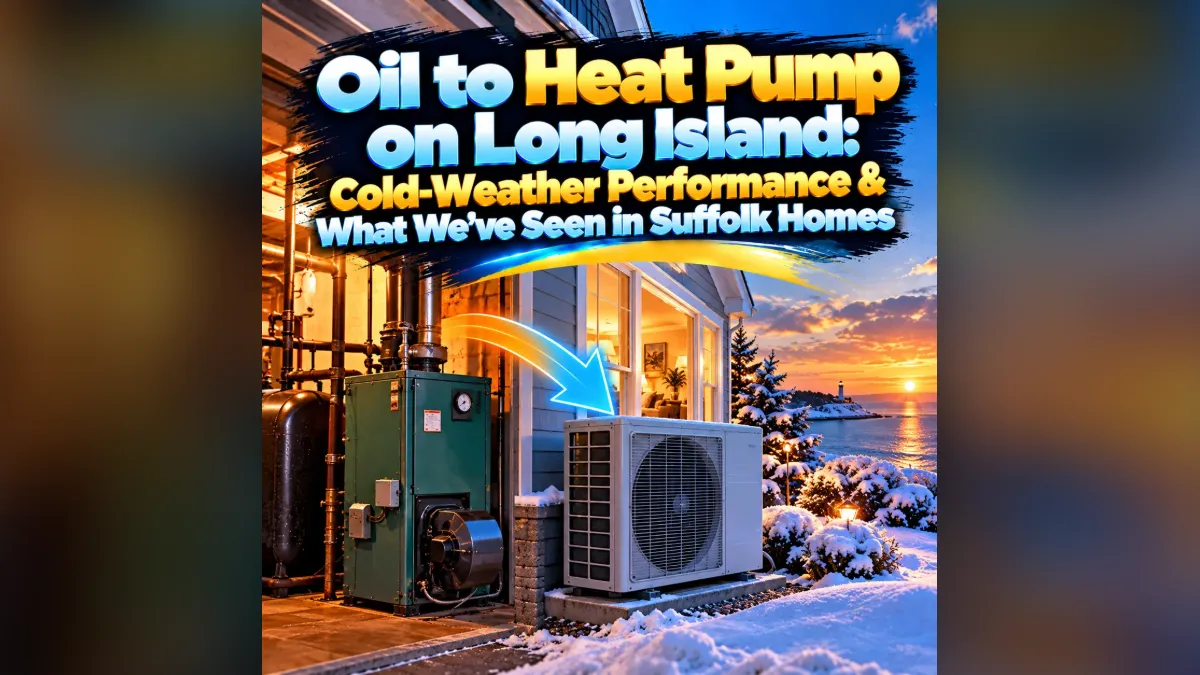
Yes, a properly sized cold-climate heat pump can heat a Suffolk County home through a normal Long Island winter without oil. The catch is the words "properly sized" and "cold-climate." Most of the complaints we hear about heat pumps on Long Island trace back to the wrong equipment, the wrong size, or an install that ignored how the house was actually heated before. Here's what we look at when a homeowner calls us about switching from oil, and what we've seen in Suffolk homes once the cold really sets in.
Can a heat pump really keep up with a Long Island winter?
Yes. Long Island's coldest design days sit around 10 to 15°F, and current cold-climate heat pumps are built to keep producing heat well below that, with many models rated to run at 5°F and still put out most of their full capacity. Suffolk rarely spends long below zero, so for most homes the heat pump does the job on its own.
The older heat pumps people remember from the 1990s were a different animal. They lost steam fast below about 35°F and leaned hard on electric backup strips, which is where the "heat pumps blow cold air" reputation came from. Today's inverter-driven units slow down and speed up instead of slamming on and off, so the air coming out stays warm and steady.
What actually happens on a 10°F morning?
On the coldest mornings a heat pump runs longer and steadier than an oil boiler would. That's normal. An oil burner fires hot and shuts off; a heat pump keeps a lower, constant flow of warm air going. Homeowners who are used to radiators clanking on sometimes think the system is struggling when it's simply doing its job.
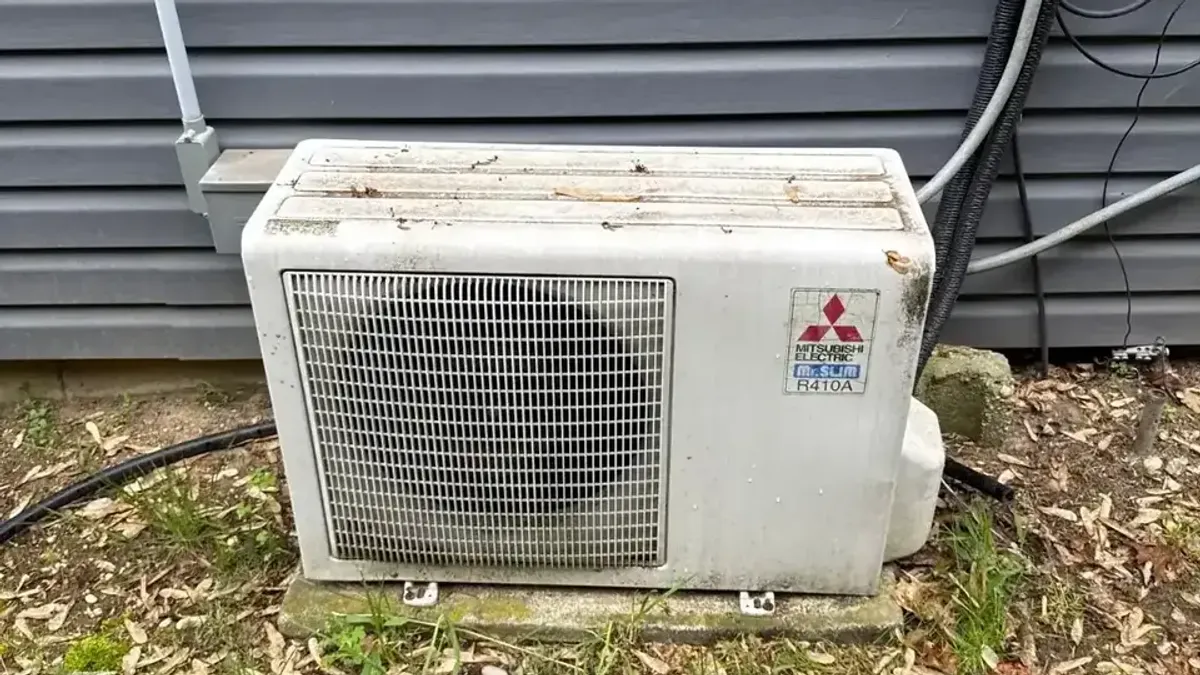
You'll also see the outdoor unit go into defrost a few times on damp, cold days. It may hum differently and release a little steam for a few minutes. That's the unit clearing frost off its coil, and it's expected in our humid coastal air. What isn't normal is a unit that's buried in ice or one that never seems to shut off when it's 40°F outside. Those are sizing or installation problems, and we'd want to take a look.
Do I need to keep my oil boiler as a backup?
Not always. Many Suffolk homes run fine on the heat pump alone, but keeping the boiler for a few seasons as backup (a "dual-fuel" or hybrid setup) is a reasonable choice if you're nervous about the switch or your home is drafty. The system runs on the heat pump most of the winter and only calls the boiler on the harshest days.
Our honest opinion: if your house has decent insulation and the heat pump is sized from a real load calculation, you probably won't use the backup much. If the house is a leaky 1950s Cape with original windows, a hybrid setup buys you peace of mind while you work on air sealing.
What's different about converting a Suffolk oil home?
Most oil-heated homes on Long Island have hot-water baseboard or cast-iron radiators and no ductwork. That changes the plan. Here's what we check before quoting anything:
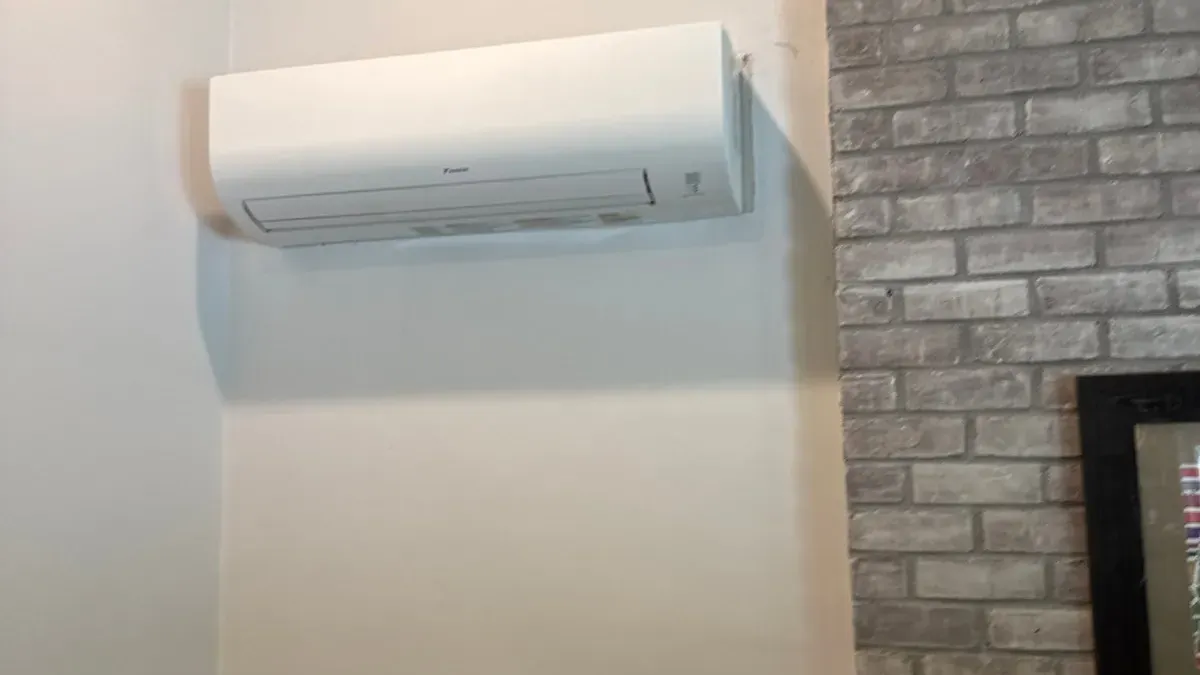
- Ducts or no ducts. If there's no ductwork, ductless mini-splits (wall, ceiling or floor units) are usually the cleanest route. If you already have central AC ducts, a ducted heat pump may be able to use them, provided they're sized for heating airflow.
- Hot water. A lot of oil boilers also make your domestic hot water through a coil. Pull the boiler out and you need a new water heater. A heat pump water heater pairs well with this kind of conversion.
- Electrical panel. Older 100-amp panels often need an upgrade to handle the heat pump, a heat pump water heater and everything else in the house.
- Outdoor unit placement. We mount outdoor units up off the ground on a stand or wall bracket so snow and drifting don't block the coil, and away from where the roof sheds snow and water.
- Salt air. Near the South Shore or the North Shore bluffs, coastal corrosion is real. Coated coils and the right placement make a difference in how long the outdoor unit lasts.
How do you size a heat pump for an older Long Island house?
Sizing should come from a room-by-room heat loss calculation (Manual J), not from the size of your old boiler. Oil boilers on Long Island are very often oversized, sometimes by double, so copying the old number leads to an oversized heat pump that short-cycles and dehumidifies poorly in summer.
We look at square footage, insulation, window type, how many exterior walls each room has, and which rooms you actually live in. A finished basement, a bonus room over the garage and a sunroom all behave differently in January.
Oil vs. heat pump: how do they compare day to day?
| Oil boiler | Cold-climate heat pump | |
|---|---|---|
| Fuel deliveries | Yes, plus tank monitoring | None |
| Summer cooling | No (separate AC needed) | Yes, same system |
| Heat feel | Hot bursts from radiators | Steady, even warmth |
| Annual service | Burner cleaning, nozzle, filter | Filter cleaning, coil and refrigerant check |
| Room-by-room control | Limited zones | Each head or zone can be set separately |
What about the oil tank?
Once the boiler is gone, the oil tank doesn't go away on its own. Whether it's in the basement or buried in the yard, it needs to be properly emptied and either removed or abandoned according to local rules. Check with your town and Suffolk County about what's required for your property, and get it done by a licensed tank contractor. It's also worth doing before you sell, because buyers and their inspectors will ask.
Are there rebates for switching from oil?
There can be. PSEG Long Island has offered heat pump rebates, and the amounts and rules change. K2 is not a PSEG Long Island participating contractor; homeowners claim rebates through a participating contractor or directly with PSEG Long Island, so check the current program on PSEG Long Island's website before you sign anything. We've written more about the program in our PSEG Long Island heat pump rebate guide.
A tip from our technicians
Set it and leave it. The biggest habit change for oil customers is the thermostat. With oil, a lot of people drop the heat to 60 overnight and crank it in the morning. With a heat pump, deep setbacks force the system to recover hard on the coldest mornings, which is exactly when backup heat kicks in. Pick a comfortable temperature, drop it a degree or two at night if you like, and let the system hold it. Keep the outdoor unit clear of snow, and clean or check the indoor filters every month or two during heavy use.
Is switching from oil worth it for your home?
For most Suffolk homes with reasonable insulation, a cold-climate heat pump is a solid replacement for oil, and you get central-quality cooling in the same system. It makes the most sense when your boiler is aging, you're adding or replacing AC anyway, or you're tired of oil deliveries. If your home is very drafty, plan on air sealing or a hybrid setup first.
Want an honest read on your house? K2 Cooling & Heating serves homeowners across Suffolk County and Nassau County from our shop in Deer Park. Call us at (631) 414-7141 or request a visit online, and we'll walk your home, run the numbers and tell you straight whether a heat pump fits.
Need a technician rather than a guide? See our heat pump service, or read about HVAC repair in Deer Park, NY. K2 answers 24/7 at (631) 414-7141.