Summer on Long Island can be beautiful, but it can also bring soaring electricity bills. Many homeowners assume expensive cooling costs are simply part of living through hot, humid summers. The truth is that small mistakes around your home could be costing hundreds of dollars every year.
Whether you own a newer central air system or an older AC unit, avoiding these common mistakes can improve comfort, lower utility bills, and even extend the life of your HVAC equipment.
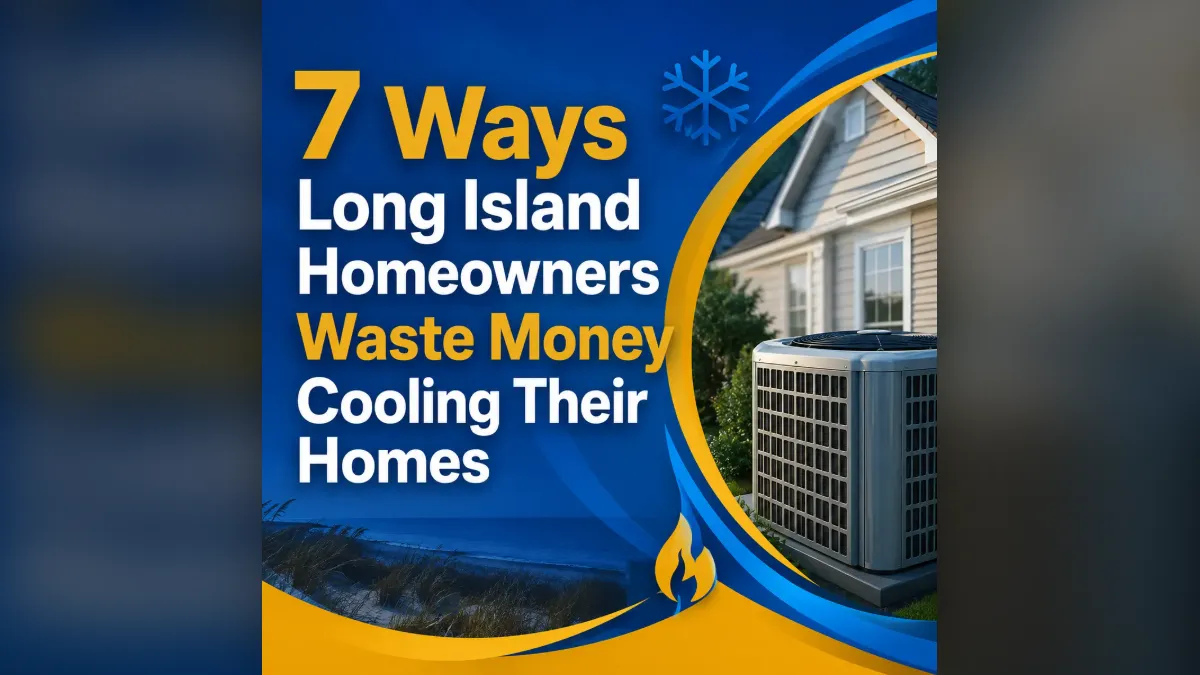
Here are seven of the biggest ways Long Island homeowners waste money cooling their homes, and what you can do instead.
1. Setting the Thermostat Too Low
Many people believe setting the thermostat to 65°F cools the house faster.
It doesn't.
Your air conditioner cools at the same rate regardless of how low you set the temperature. Instead, your system simply runs longer, using significantly more electricity.
Better Approach
- Keep your thermostat between 74–78°F when you're home.
- Raise it a few degrees when you're away.
- Install a programmable or smart thermostat to automate savings.
2. Skipping Annual AC Maintenance
Your air conditioner loses efficiency when dirt builds up inside the system.
Dirty evaporator coils, clogged drain lines, low refrigerant, and worn electrical components force the system to work much harder than necessary.
Annual maintenance helps:
- Improve efficiency
- Reduce breakdowns
- Lower electric bills
- Extend equipment life
Preventive maintenance is one of the highest-return investments a homeowner can make.
3. Forgetting to Replace Air Filters
This is one of the easiest mistakes to avoid.
A clogged filter restricts airflow, making your AC run longer while delivering less cooling.
Replace Filters
- Every 1–2 months during heavy summer use
- More often if you have pets
- More often if someone suffers from allergies
A clean filter improves airflow, indoor air quality, and energy efficiency.
4. Ignoring Air Leaks Around the House
Even the best air conditioner can't keep up if cold air constantly escapes.
Common leak locations include:
- Windows
- Exterior doors
- Attic access panels
- Basement areas
- Ductwork
Air sealing keeps conditioned air inside where it belongs.
Even small gaps can significantly increase cooling costs over an entire summer.
5. Running an Old, Inefficient AC System
Older systems often use considerably more electricity than modern high-efficiency equipment.
If your system is:
- 12–15+ years old
- Frequently breaking down
- Needing refrigerant every season
- Producing uneven temperatures
…it may actually cost less over time to replace it than continue repairing it.
Today's high-efficiency systems can dramatically reduce monthly cooling expenses.
6. Cooling Empty Rooms
Many homeowners cool every room equally, even those that are rarely used.
Instead:
- Close doors to unused rooms if appropriate for your HVAC setup.
- Adjust dampers if your system has them.
- Use zoning systems where available.
- Install smart thermostats with room sensors.
Cooling only the spaces you actually use reduces unnecessary energy consumption.
7. Waiting Until the AC Breaks
Emergency repairs almost always cost more than preventive service.
Many expensive failures begin as inexpensive problems like:
- Weak capacitors
- Dirty condenser coils
- Clogged drain lines
- Loose electrical connections
- Low refrigerant levels
Finding these issues early can prevent major repairs and inconvenient breakdowns during Long Island's hottest days.
More Summer Mistakes That Cost Money
Skipping Coil Cleaning
Outdoor condenser coils collect:
- Grass clippings
- Dirt
- Cottonwood
- Leaves
- Pollen
Dirty coils force your system to work much harder.
This can result in:
- Overheating
- Higher electric bills
- Reduced cooling
- Compressor damage
Professional cleaning helps restore efficiency and improves system performance.
Blocking Air Vents
Furniture, curtains, rugs, and storage boxes often block supply or return vents.
This restricts airflow and creates uneven cooling throughout your home.
Poor airflow can also increase pressure inside the HVAC system, leading to unnecessary wear on critical components.
Keep all vents open and unobstructed for maximum efficiency.
Ignoring Strange Noises
Your air conditioner usually gives warning signs before a major failure.
Don't ignore:
- Buzzing
- Grinding
- Squealing
- Clicking
- Rattling
These sounds may indicate:
- Loose electrical components
- Motor problems
- Fan issues
- Compressor trouble
Addressing these issues early can save hundreds, or even thousands, of dollars.
Delaying Refrigerant Leak Repairs
If your AC isn't cooling properly, adding refrigerant isn't always the solution.
Low refrigerant often means there's a leak.
Ignoring the problem can cause:
- Frozen evaporator coils
- Compressor damage
- Reduced efficiency
- Complete system failure
A qualified technician should locate and repair the leak before recharging the system.
Forgetting About the Condensate Drain
Every air conditioner removes moisture from your home's air.
That water exits through the condensate drain line.
Over time, algae, dirt, and debris can clog the drain.
This can lead to:
- Water damage
- Ceiling stains
- Mold growth
- Emergency shutdowns
Routine maintenance keeps the drain clear and prevents costly water damage.
Hiring the Cheapest Contractor
Choosing the lowest-priced HVAC company can end up costing far more in the long run.
Poor installation or improper repairs often lead to:
- Repeat service calls
- Shortened equipment life
- Reduced efficiency
- Safety concerns
Always choose a licensed, insured, and experienced HVAC contractor with strong customer reviews and transparent pricing.
What an Old AC Really Costs Every Month
An aging system costs money every month, not only on the day it breaks. These are the costs that add up quietly.
Higher Energy Bills
One of the biggest hidden expenses is electricity.
As air conditioners age, their components wear down. Compressors become less efficient, coils get dirty, motors weaken, and refrigerant performance decreases. The system has to work harder and run longer to cool your home.
That extra runtime means:
- Higher electric bills
- Longer cooling cycles
- More strain on the entire HVAC system
A newer high-efficiency system can often reduce cooling costs significantly compared to an older unit that's 12–20 years old.
Constant Repair Bills
Think about how often you've called for AC service over the last few summers.
Common repairs include:
- Capacitor replacement
- Refrigerant leaks
- Fan motor failures
- Contactors
- Thermostats
- Drain line clogs
- Electrical issues
While one repair may seem affordable, several repairs each year quickly add up.
Many homeowners spend hundreds of dollars annually just keeping an aging unit alive.
Poor Energy Efficiency
Older air conditioners were built with lower efficiency ratings than today's systems.
Modern equipment uses advanced technology that cools your home while consuming less electricity.
If your AC is over 12–15 years old, chances are you're paying much more for cooling than necessary.
Uneven Cooling Throughout Your Home
Do some rooms stay hot while others feel freezing?
Older systems often struggle to maintain consistent temperatures because:
- Airflow decreases
- Components wear out
- Blower performance declines
- Refrigerant efficiency drops
The result?
Your AC runs longer while delivering less comfort.
Frequent Breakdowns During Heat Waves
Unfortunately, aging systems rarely fail on mild days.
They usually stop working during the hottest days of summer, exactly when they're under the most stress.
Emergency repairs often cost more and may leave your family without cooling for hours or even days.
Older Refrigerants Can Increase Costs
Many older systems use refrigerants that are becoming more expensive and difficult to obtain.
Even a small refrigerant leak can become an expensive repair because the refrigerant itself may cost significantly more than it did years ago.
Your Home May Feel More Humid
Air conditioners don't just cool your home, they also remove humidity.
Older units often lose their ability to control moisture effectively.
High indoor humidity can make your home feel:
- Sticky
- Uncomfortable
- Warmer than the thermostat reading
That causes many homeowners to lower the thermostat, increasing energy use even more.
Bonus Money-Saving Tips
Want even lower cooling bills?
Consider these additional improvements:
- Install blackout curtains on sunny windows.
- Use ceiling fans to improve air circulation.
- Keep outdoor condenser units free of debris.
- Seal and insulate attic spaces.
- Avoid using ovens during the hottest part of the day.
- Replace incandescent bulbs with LEDs.
- Schedule professional AC tune-ups before summer begins.
Small improvements often add up to noticeable savings.
Why Professional HVAC Maintenance Pays for Itself
Routine maintenance isn't just about preventing breakdowns.
It also helps:
- Lower monthly utility bills
- Improve indoor comfort
- Catch problems before they become expensive
- Increase equipment lifespan
- Maintain manufacturer warranty requirements
- Improve indoor air quality
Many homeowners recover the cost of maintenance through reduced energy consumption and fewer repair bills over time.
Final Thoughts
High cooling costs aren't always caused by high temperatures. In many cases, they're the result of small habits and neglected maintenance that quietly increase energy use month after month.
By avoiding these seven common mistakes, Long Island homeowners can enjoy a more comfortable home, lower utility bills, and a longer-lasting air conditioning system. Whether it's replacing an air filter, sealing air leaks, or scheduling annual maintenance, small changes today can lead to significant savings throughout the cooling season.
If your AC has been working harder than usual or your energy bills continue to climb, a professional inspection can identify hidden issues before they become expensive repairs.
The cheapest fix on this list is usually an annual AC tune-up. If your system is past its useful life, our central air installation page covers what a replacement involves, and homeowners near our shop can start with HVAC service in Deer Park.
If an old, inefficient unit is the biggest drain, see replacing an old central air system.
Closer to home, we handle AC repair in Islip Terrace.
Need a technician rather than a guide? See our AC repair service, or read about HVAC repair in Deer Park, NY. K2 answers 24/7 at (631) 414-7141.