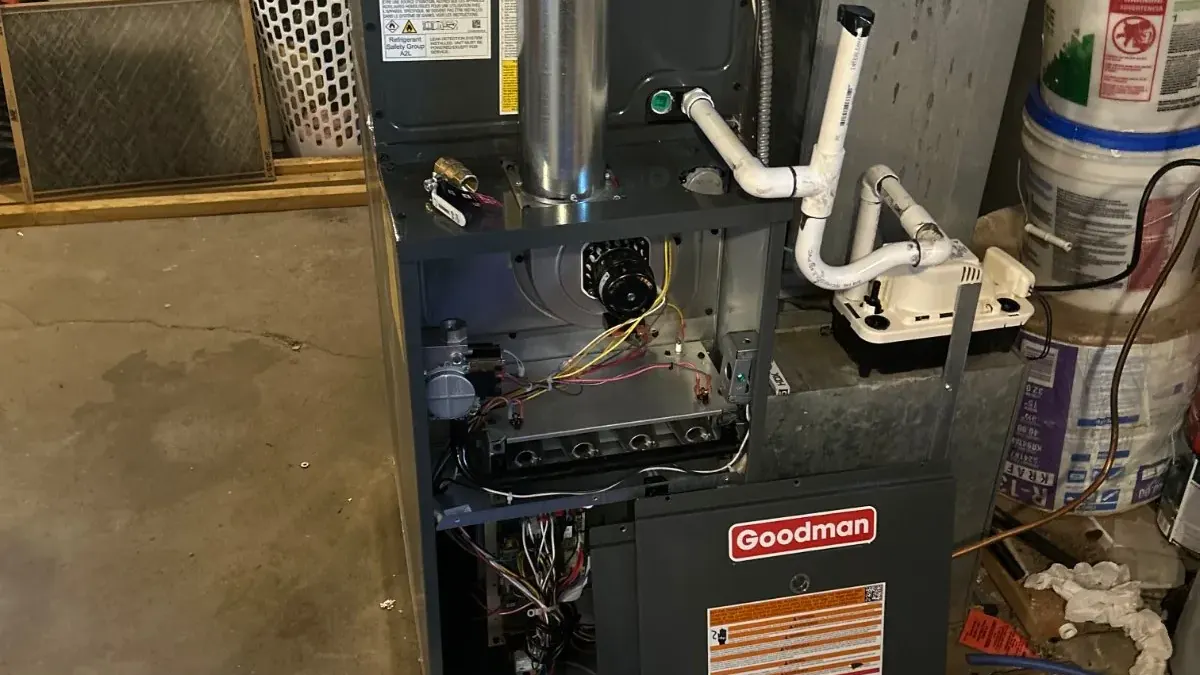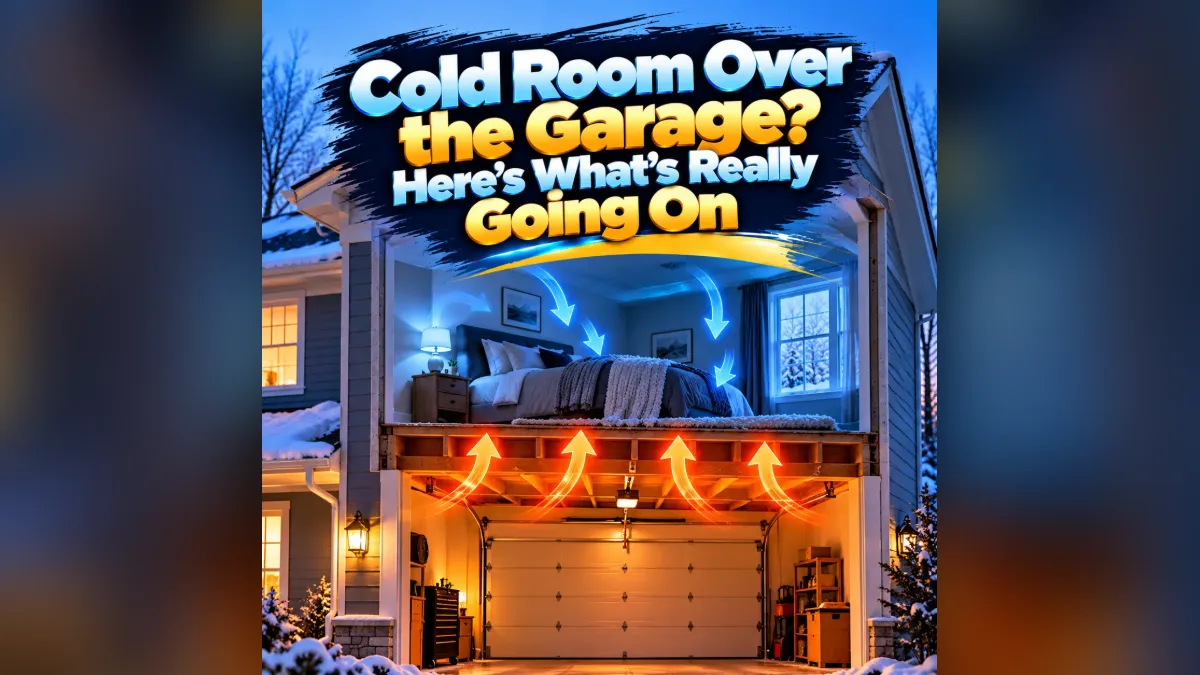
If the bedroom or bonus room over your garage is always 5 to 10 degrees colder than the rest of the house, your furnace is probably fine. The problem is the room itself. It loses heat through the floor, the ceiling and the outside walls all at once, and the heating system usually can't keep up with that.
We see this all the time on Long Island, especially in high ranches, split-levels and colonials with a bedroom built over an attached garage. Here's what's really going on and what actually fixes it.
Why is the room over my garage so cold?
Because it's exposed on almost every side. A normal bedroom sits between other heated rooms. A room over the garage has an unheated garage below, an attic or sloped roof above, and outside walls around it. On a 20-degree January night, that room is losing heat in every direction while the thermostat downstairs thinks the house is fine.
Most homes we look at have two or three of the problems below happening at the same time. That's why a single quick fix rarely solves it.
Is the floor over the garage the main problem?
In most homes, yes. The floor is usually the single biggest source of heat loss in a room over a garage. Builders often stuffed fiberglass batts between the floor joists and moved on. Over 20 or 30 years those batts sag, shift or fall out, and cold garage air moves right under your feet.
Here's a simple test. Walk barefoot from the hallway into that room. If the floor feels noticeably colder, especially near the outside wall, the floor is a big part of your problem.
Can air leaks really make that much of a difference?
Yes, and they're the part people miss. Insulation slows heat loss, but it does almost nothing to stop moving air. Rooms over garages have hidden gaps where the floor joists meet the outside wall, behind the short knee walls, around recessed lights and around the attic hatch.
If the room feels a lot worse on windy nights than on calm nights at the same temperature, air leaks are a big factor. Long Island's nor'easter winds find every one of those gaps.
Why is so little warm air coming out of the vent?
Because that duct has the longest, coldest trip in the house. With forced-air heat, the supply duct to the room over the garage is often the longest run in the system, and it usually passes through the garage ceiling or an unheated attic. The air cools off along the way, and leaky joints dump some of it before it ever reaches the room.
Hold your hand over that register, then over one in a downstairs bedroom. If the difference in airflow and warmth is obvious, the duct run is part of the story.
Does the room need a return vent?
Often, yes. Air has to come back to the system, not just go out. A lot of rooms over garages have a supply vent and no return at all. Close the door and the room pressurizes, so less warm air can get in. A return vent or a transfer grille lets the air actually circulate.
Why doesn't turning up the thermostat help?
Because the thermostat isn't in that room. It's probably in a hallway or living room downstairs. It shuts the heat off when that spot is comfortable, long before the room over the garage catches up. Turning it up just makes the rest of the house stuffy and raises your bill.
What's the best way to fix a cold room over the garage?
Fix the building first, then the airflow, then add heat if you still need it. Here's the order we recommend:
- Air seal and insulate the garage ceiling. Sealing the rim joists and gaps, then filling the joist bays properly (dense-pack or spray foam), usually makes the biggest difference for the money.
- Seal and insulate the duct run. Sealing leaky joints and insulating the duct where it passes through the garage or attic gets more of the heat you're paying for into the room.
- Balance the system and add a return path. Adjusting dampers gives the long run its fair share of air, and a return lets it circulate.
- Add a zone or a ductless mini-split. If the room is still behind, give it its own heat and its own thermostat.
Our honest opinion: for a lot of Long Island homes, a single ductless mini-split is the cleanest long-term answer for a room over the garage. It heats in winter, cools in summer, runs on its own thermostat and doesn't depend on that long duct run at all.
Should I close vents in other rooms to push heat upstairs?
No. Closing vents raises pressure in the ductwork and cuts overall airflow. Your system works harder, and the cold room barely gets any warmer. Leave the other vents open and fix the actual cause.
What can I check myself before calling a technician?
- Make sure the register in that room is fully open and not blocked by a bed, dresser or rug.
- Change the furnace filter if it's been more than 1 to 3 months. A clogged filter hurts the longest duct runs first.
- Feel for drafts along the base of the walls, around outlets and near the attic hatch.
- Notice whether the room is also too hot in summer. If it is, that points to insulation, air leaks and ductwork, not a broken furnace.
When should I call an HVAC company about a cold room?
If the room is still 5 or more degrees colder after those checks, call. A technician can measure the airflow at that register, check the duct run for leaks and heat loss, and figure out whether the room needs more heat than your system can send it. Then you're paying for the fix that works, not guessing.
K2 Cooling & Heating fixes problem rooms like this across Long Island, from Deer Park and Babylon to Huntington and Islip, with duct sealing, system balancing and ductless mini-split installs. If the room over your garage never feels right, call us at (631) 414-7141 and we'll find out what's really going on.
Need a technician rather than a guide? See our HVAC tune-up service, or read about HVAC repair in Deer Park, NY. K2 answers 24/7 at (631) 414-7141.