Updated October 2026 · By the K2 Cooling & Heating team, Deer Park, NY · Serving Suffolk and Nassau County
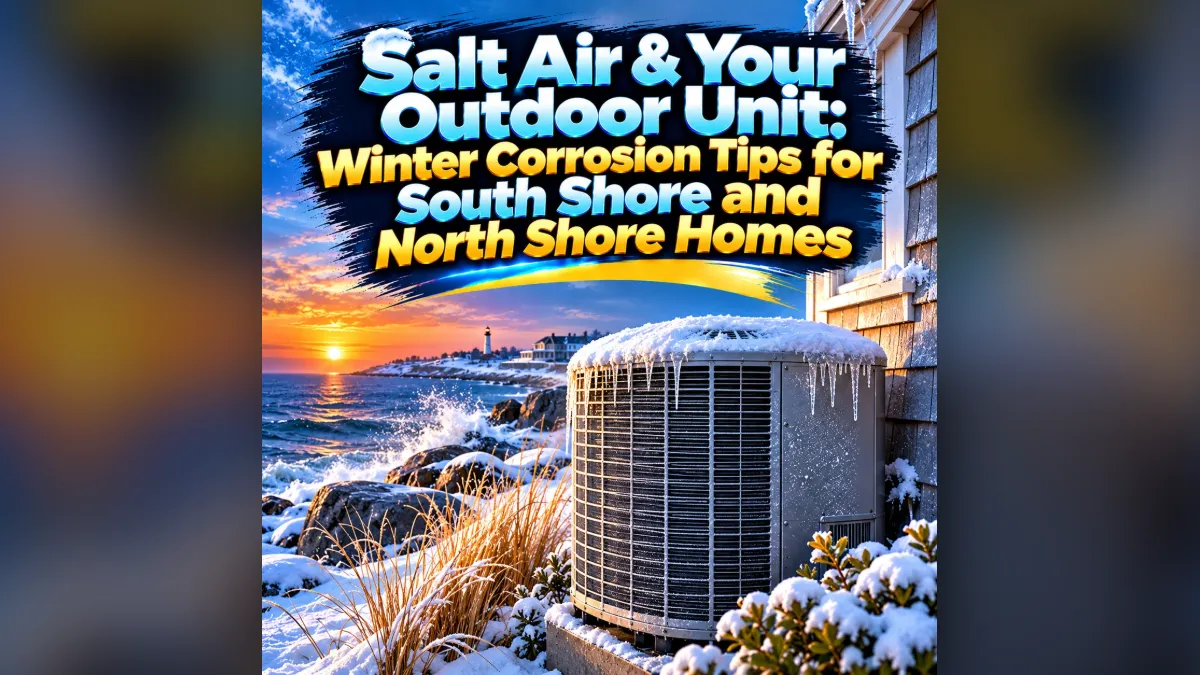
Pull the side panel off an outdoor unit in Babylon Village or Northport and you can often tell how close the house is to the water before you even look at the address. The fins crumble at a touch. White powder coats the coil. The bolts on the base are rusted solid. Salt does that, and on Long Island it comes at your equipment from two directions: the air off the water all year, and the road salt that gets plowed and sprayed all winter.
Does salt air really damage AC and heat pump units?
Yes. Salt in the air settles on the outdoor coil and slowly corrodes the thin aluminum fins and copper tubing, which lowers efficiency and can lead to refrigerant leaks. Homes near the ocean, the Great South Bay or Long Island Sound see it fastest, but salt carried on the wind reaches well inland during storms.
The outdoor coil is built from two metals, aluminum fins pressed onto copper tubes. Add salt and moisture and you get galvanic corrosion right where those metals touch. Over time the fins lose contact with the tubes, the coil can't move heat well, and pinhole leaks can form in the copper.
Why is winter hard on outdoor units near the water?
Winter adds road salt to the salt air. Plows, snow blowers and passing cars throw salty slush onto units near driveways and streets, and de-icer used on nearby walkways washes right into the base. Nor'easters also push salt spray farther inland than usual, coating units that rarely see it in summer.
If you have a heat pump, it keeps running all winter, pulling that salty air straight through the coil every day. A central AC sits idle, but the salt still sits on it, wet and cold, for months.
Which Long Island homes are most at risk?
Homes within about a mile of open water, and any home where the outdoor unit sits close to a driveway, street or salted walkway, face the highest risk. Exposure from the wind and the direction the unit faces matters too.
| Location | Main salt source | Risk level |
|---|---|---|
| South Shore waterfront: Massapequa, Lindenhurst, Babylon, West Islip, Bay Shore, Islip | Ocean and bay spray, storm surge | Very high |
| North Shore harbors: Cold Spring Harbor, Huntington, Centerport, Northport | Sound spray, harbor wind | High |
| Inland towns: Deer Park, Commack, Dix Hills, Hauppauge | Road salt and de-icer | Moderate in winter |
What are the signs of corrosion on my outdoor unit?
White or gray powder on the fins, green or blue stains on copper lines, fins that flake or crumble when touched, and rust on the cabinet base or screws are the main warning signs. Weaker heating or cooling and a system that runs longer than it used to often follow.
- White, chalky buildup on the coil fins
- Fins that break off or turn to powder when brushed
- Green or blue discoloration on copper tubes or fittings
- Rust on the base pan, cabinet panels, screws or mounting bolts
- Oily spots on the coil, which can mean a refrigerant leak
- The system running longer to reach the thermostat setting
How do I protect my outdoor unit from salt this winter?
Keep road salt and de-icer away from the unit, rinse the coil with fresh water on mild days, and keep the area around it clear. A few small habits go a long way.
- Don't use rock salt near the unit. On walkways and steps within a few feet of it, use sand or a de-icer labeled safe for plants and concrete.
- Aim snow blowers and shovels away from it. Salty slush thrown onto the coil sits there for weeks.
- Rinse on a mild day. When it's comfortably above freezing, turn off power to the unit and gently rinse the coil with a garden hose from the inside out if you can, or from top to bottom. Never use a pressure washer, which flattens the fins.
- Rinse after big storms. After a nor'easter pushes salt spray inland, a fresh-water rinse on the next mild day helps.
- Keep it raised and clear. The unit should sit on a pad or stand above standing water and snow, with 18 to 24 inches of open space around it.
- Don't wrap a heat pump. It needs airflow all winter. An AC-only unit can have a top cover, but never a full wrap that traps salty moisture against the coil.
Can I rinse my outdoor unit in winter?
Yes, but only on a day that's well above freezing and only with power turned off at the disconnect. Water left on the coil on a freezing night can turn to ice. Gentle hose pressure is all you need. If you have a heat pump, let it run for a while afterward so it dries before the temperature drops.
Are there coastal-rated or coated outdoor units?
Yes. Many manufacturers offer coil coatings applied at the plant and coastal-rated models built for salt exposure. Coatings seal the fins and tubes from salty moisture, and coastal models often use better cabinet materials and hardware. For a waterfront home on the South Shore or North Shore, ask about these options when replacing equipment.
Coil coatings can also be applied to some existing units in the field. A technician can look at the condition of your coil and tell you whether that still makes sense or whether it's already too far gone.
K2 field tip: Look at the side of your outdoor unit that faces the water or the street. That's almost always where corrosion starts. If that side looks worse than the others, it's time to change your rinsing and snow-clearing routine, and to have the coil checked before it starts leaking.
When should I have a technician check for corrosion?
Have the outdoor unit checked at least once a year, and twice a year if you live near the water or run a heat pump all winter. Call sooner if you see crumbling fins, oily spots on the coil, or notice your heat pump struggling to keep up. Catching corrosion early protects the coil and helps the system last.
Live near the water? Call K2.
K2 Cooling & Heating inspects, cleans and services outdoor AC and heat pump units for homeowners across Suffolk and Nassau County, from the South Shore to the North Shore, out of our shop in Deer Park. Call (631) 414-7141 or request service online to have your outdoor unit checked this winter.
Need a technician rather than a guide? See our HVAC tune-up service, or read about HVAC repair in Deer Park, NY. K2 answers 24/7 at (631) 414-7141.