Updated October 2026 · By the K2 Cooling & Heating team, Deer Park, NY · Serving Suffolk and Nassau County
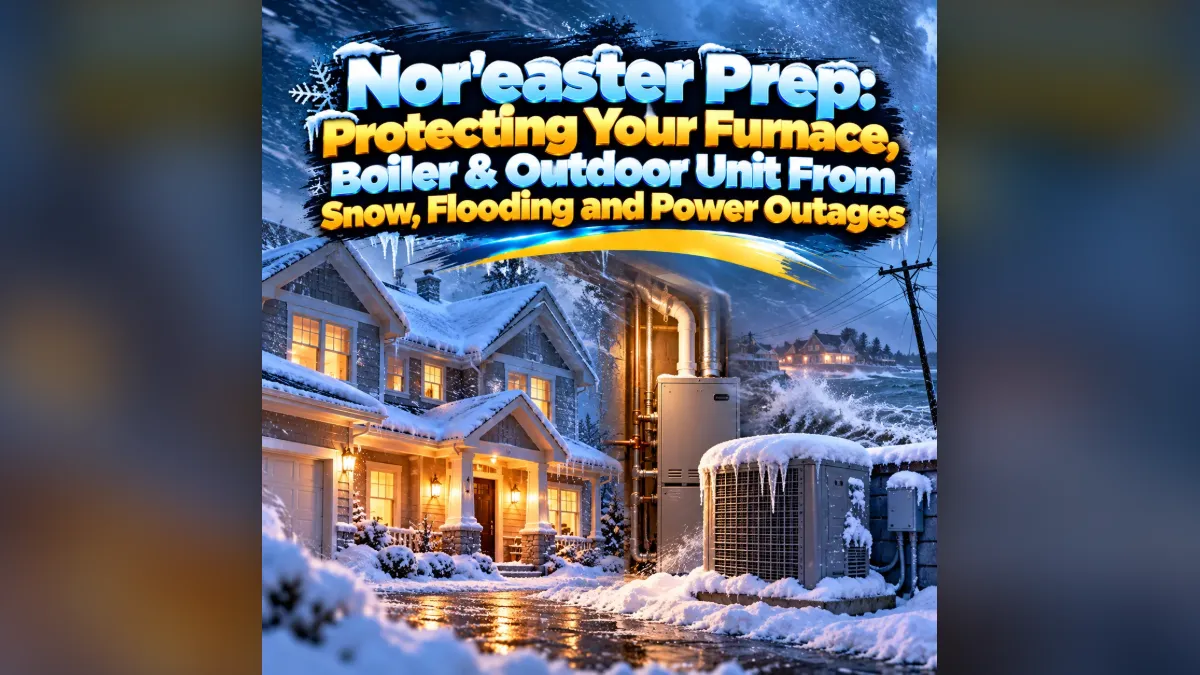
Every winter, the calls after a nor'easter sound almost the same. The power came back but the furnace didn't. The boiler sat in six inches of water overnight. The heat pump is buried under a snowbank and the house is getting cold. Most of these calls could have been avoided with an hour of prep before the storm. Here's what to do before, during and after a nor'easter hits Long Island.
When do nor'easters hit Long Island?
Nor'easters can hit Long Island anytime from October through April, but the strongest ones usually come between January and March. They bring heavy wet snow, high winds, coastal flooding on the South Shore and North Shore harbors, and power outages that can last for days. Your heating system faces all of that at once.
Homes near the water in places like Lindenhurst, Babylon, Massapequa and Bay Shore deal with flooding. Inland towns like Deer Park, Commack and Dix Hills deal more with drifting snow and downed lines. Either way, your heat is the system you can least afford to lose.
Will my gas or oil furnace work during a power outage?
No. Almost every modern furnace and boiler needs electricity to run, even if it burns gas or oil. The blower, circulator pump, igniter, burner controls and thermostat all need power. When PSEG Long Island loses power to your street, your heat goes out with it, no matter how much fuel is in the tank.
That's why the hours after an outage matter so much. A well-insulated house holds heat for a while, but on a 20°F night the indoor temperature drops fast, and that's when pipes start to freeze. Our frozen pipes guide covers what to do if that happens.
How do I prepare my heating system before a nor'easter?
Top off your fuel, test your carbon monoxide detectors, find your vent pipes, and clear the area around your outdoor unit before the storm arrives. Do it the day before, not when the snow is already falling.
- Fill the oil tank or check your propane level. Deliveries slow down or stop during and right after a big storm.
- Test every CO detector and put fresh batteries in them and in your thermostat.
- Find your furnace or boiler vent pipes outside. High-efficiency systems vent through white PVC pipes in a side wall. Know where they are so you can clear them later.
- Clear the outdoor unit. Trim back branches, move patio furniture away, and make sure the unit sits on a pad or stand above the usual snow line.
- Move valuables and stored boxes away from the boiler or furnace if your basement has flooded before.
- Check your sump pump by pouring a bucket of water into the pit and watching it kick on.
- Set the thermostat a few degrees higher before the storm so the house starts with stored heat if power goes out.
Can snow block my furnace vents?
Yes, and it's one of the most common no-heat calls we get after a nor'easter. High-efficiency furnaces and boilers pull in air and push out exhaust through PVC pipes on the side of the house, often just a foot or two off the ground. When drifting snow covers them, the system shuts itself off for safety.
If your heat stops during or after a storm, check those pipes first. Clear snow by hand or with a small brush, at least a foot around each opening. Never block them with a tarp or cover. If the furnace doesn't restart after the pipes are clear, call a technician.
Blocked vents can also push exhaust back into the house. That's why working carbon monoxide detectors on every level are not optional during winter storm season.
Should I cover my heat pump or AC unit during a snowstorm?
Never cover a heat pump in winter. It's running and needs open airflow to heat your home. An AC-only condenser can have a cover over the top, but not one that wraps the sides, because trapped moisture causes rust and invites rodents. For both, the job is to keep snow and ice away from the unit.
- Clear snow from the top and sides after every storm, keeping 18 to 24 inches open around it.
- Use a soft broom, not a shovel, near the coil fins.
- Watch for ice falling from the roof or gutters above the unit.
- Keep plows and snow blowers from throwing snow onto it.
What should I do if my boiler or furnace gets flooded?
Don't turn it on. Any furnace, boiler or water heater that has sat in floodwater needs to be inspected by a licensed technician before it runs again. Water damages gas valves, controls, burners and wiring, and some of that damage isn't visible. Starting a flooded unit can cause a fire, a gas leak or a carbon monoxide problem.
Shut off power to the unit at the service switch if you can reach it safely without standing in water. If you can't, leave it and call the utility. South Shore homes that went through Sandy know this lesson well. Basement equipment that looked fine after the water went down failed weeks later.
Is it safe to run a generator for my heating system?
Yes, if it's installed and connected the right way. A portable generator must run outdoors, at least 20 feet from doors and windows, and never in a garage, basement or porch. Generator exhaust is the leading cause of carbon monoxide poisoning after big storms.
Never plug a generator into a wall outlet to power the house. That can send electricity back down the utility lines and hurt line workers. A transfer switch or interlock installed by a licensed electrician is the safe way to run your furnace or boiler on a generator.
What should I do when the power comes back on?
Give it a few minutes before cranking the thermostat, and check that the heat actually comes on. Power often flickers on and off while crews work, and those surges are hard on furnace control boards and heat pump compressors.
- Wait 5 to 10 minutes after power returns before turning the heat back up.
- Make sure the thermostat display is on and set to Heat.
- Listen for the burner or blower to start and feel for warm air or warm baseboards within 15 minutes.
- If the system doesn't start, check the service switch and breaker before calling.
K2 field tip: Take a phone photo of your furnace or boiler vent pipes and your outdoor unit in the fall, before any snow. When a storm buries everything, you'll know exactly where to dig. It sounds simple, but it saves a lot of guessing in the dark with a flashlight.
When should I call an HVAC technician after a storm?
Call right away if your heat won't come back on after power returns, your equipment was in floodwater, a CO alarm went off, or you smell gas or burning. Don't wait until the house is cold. After a big nor'easter, service calls back up quickly across Long Island.
If you smell gas, leave the house and call your gas utility or 911 from outside. Don't flip switches or use your phone inside.
Storm knocked out your heat? Call K2.
K2 Cooling & Heating services furnaces, boilers and heat pumps for homeowners across Suffolk and Nassau County from our shop in Deer Park. Call (631) 414-7141 or request service online and we'll get your heat running again.
Need a technician rather than a guide? See our boiler repair service, or read about HVAC repair in Deer Park, NY. K2 answers 24/7 at (631) 414-7141.